Digital gateways advertising
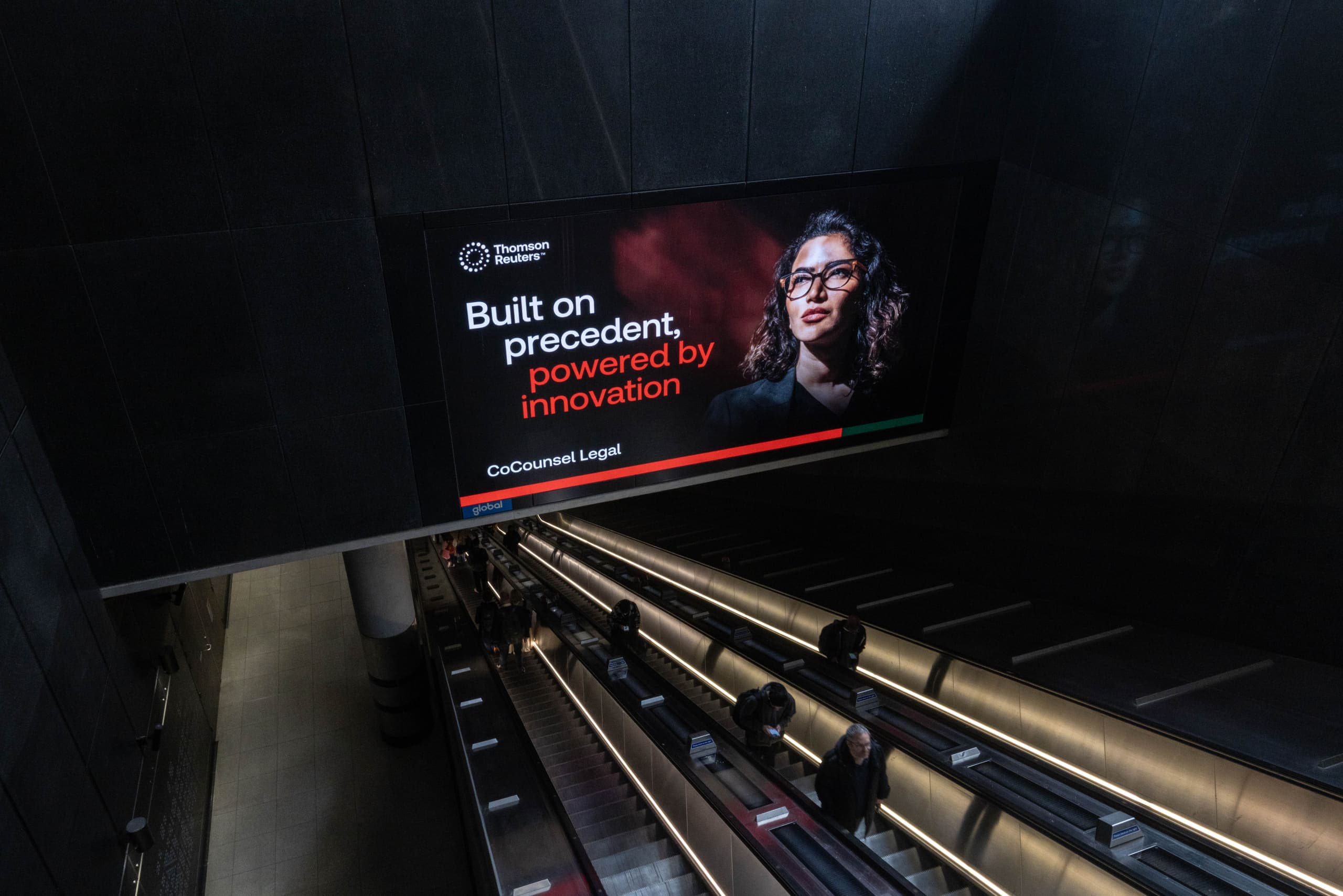
Large portrait screens positioned at ticket hall entry, seen head on as passengers arrive.
From £12,000 per 2 weeks
Specification
- Format type
- digital
- Creative size
- Landscape, resolution varies by station
- Typical duration
- 2 weeks
- Dwell time
- Head-on, as passengers enter the ticket hall
- Where it appears
- Ticket halls at major interchanges
- Best for
- High impact awareness
- Indicative cost
- £12,000 to £40,000 per 2 weeks
- Availability
- Major interchanges only. Inventory is limited and books further ahead than most formats.
Indicative planning guidance, excluding VAT. Confirmed with the media owner at booking.
What it is
Large landscape screens positioned at ticket hall entry so passengers meet them head-on as they come in rather than in passing. Resolution differs from gateway to gateway, so artwork is built to the specification for the sites actually booked. They exist only at major interchanges.
This is the most limited digital inventory on the network. There are few positions, they book further ahead than most formats, and the rate is quoted as a range rather than a single figure because what a gateway costs depends heavily on which one.
Why advertisers use it
Head-on placement is the whole proposition. Most station advertising is met at an angle or in peripheral vision as people move past it; a gateway is in the line of travel, at the moment of arrival, before the passenger has started navigating.
The scarcity is part of the buy. With inventory this limited, holding a gateway at a major interchange is closer to owning a moment in the station than to taking one site among many — which is why these positions go early.
Cost
£12,000 to £40,000 per 2 weeks. Rates move with zone, station footfall and trading period: January and August are the softest, the Christmas run-in the hardest. The range reflects which interchange rather than a negotiable spread, so a shortlist of stations is what turns it into a number. Artwork is quoted separately, as with every digital format.
Whether that flexibility earns its cost depends on the campaign: digital and paper compared honestly.
Booking and lead time
Six to eight weeks ahead is the sweet spot: it protects both the price and the quality of the sites you get. Station dominations and peak trading periods need longer. Copy clearance sits ahead of the on-air date, so leave room for it in the schedule.
Lead time is the usual constraint — working backwards from a fixed date is the safest way to plan it.
Supplying to spec is only half of it: copy clearance sits ahead of the on-air date.
Before you plan around one
Availability is the binding constraint, not budget. Major interchanges only, limited positions, and a booking horizon longer than most of the network — a campaign built around a gateway needs the site confirmed before the rest of the plan is fixed.
It is also a single point rather than a presence. A gateway reaches everyone entering through that hall and nobody else in the station, so it works as the opening statement of a wider buy more often than as a campaign on its own.
Stations to consider
Our inventory records show digital gateways at these stations. Individual sites and availability are confirmed with the media owner when we plan the campaign.
- Zone 1 · King's Cross
King's Cross St Pancras
6 lines
70.3m entries and exits (2023)
- Zone 1 · City of London
Liverpool Street
5 lines
61.9m entries and exits (2023)
- Zone 1 · London Bridge
London Bridge
2 lines
50.2m entries and exits (2023)
- Zone 1 · City of London
Bank & Monument
6 lines
47.5m entries and exits (2023)
- Zone 2 · Docklands
Canary Wharf
3 lines
38.9m entries and exits (2023)
- Zone 1
Charing Cross
2 lines
Campaigns using digital gateways
Related formats
- digital
Digital escalator panels
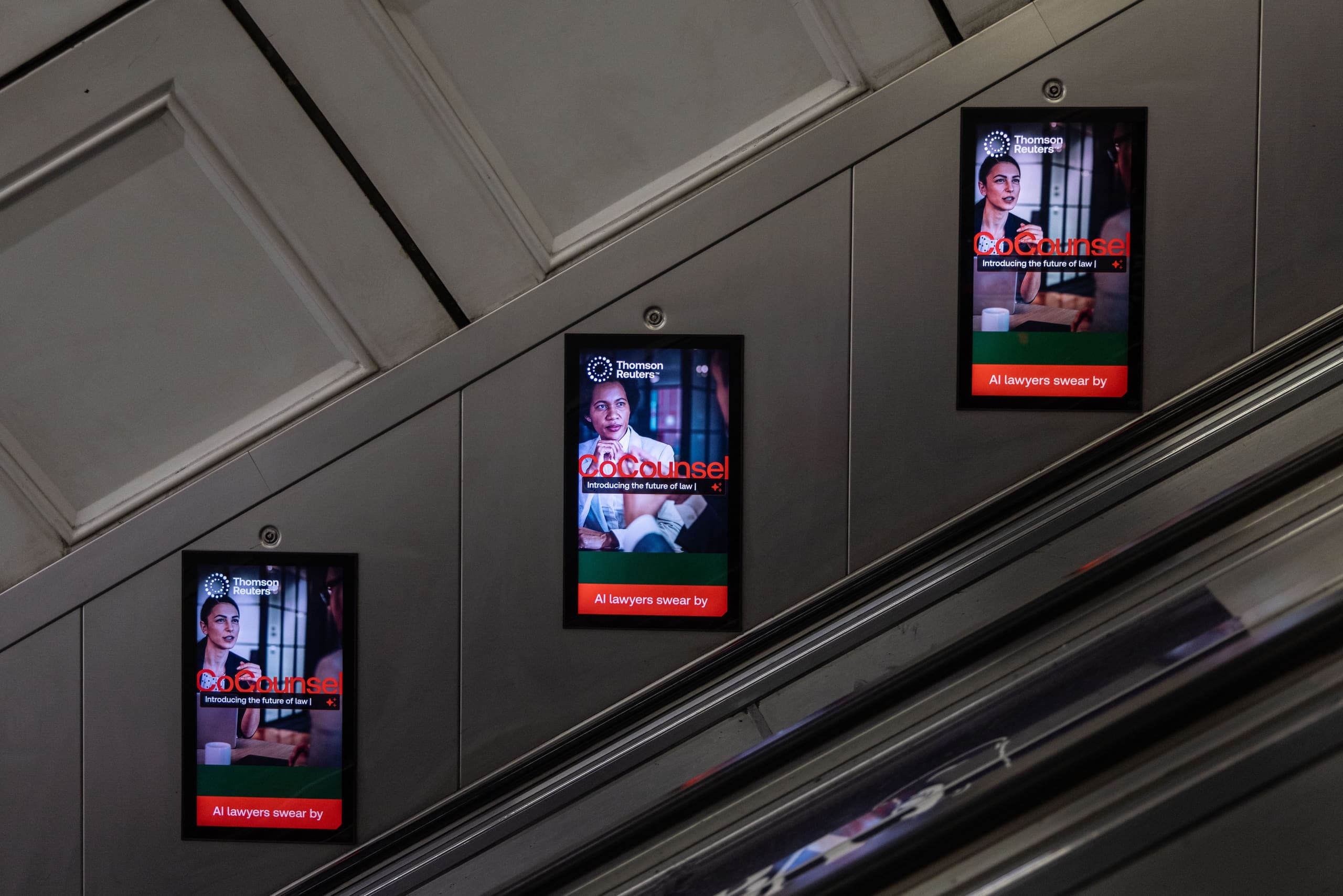
Sequential screens running the length of the escalator shaft, synchronised so one story plays out as the passenger descends.
From £25,000 per station run, per 2 weeks
- digital
Digital 6-sheet (D6)
Portrait screens at eye level in ticket halls, entrances and concourses, carrying five seconds of full motion.
From £1,500 per screen, per 2 weeks
- digital
Digital 12-sheet (D12)
The larger landscape screen in ticket halls and concourses, where a D6 is not enough presence.
From £3,000 per screen, per 2 weeks
Digital gateways questions.
£12,000 to £40,000 per 2 weeks. That is indicative planning guidance excluding production and VAT, and it moves with zone, station and trading period.
2 weeks is the standard booking, running Monday to Sunday. Longer flights are available and usually attract a volume discount.
Landscape, resolution varies by station. Artwork goes through copy clearance before the on-air date, so allow time in the schedule for it.
Ticket halls at major interchanges. Major interchanges only. Inventory is limited and books further ahead than most formats.
Get digital gateways costs.
Send the brief and we come back with a site list, costs and on-air dates within two working days.
Get campaign costs