Digital escalator panels advertising
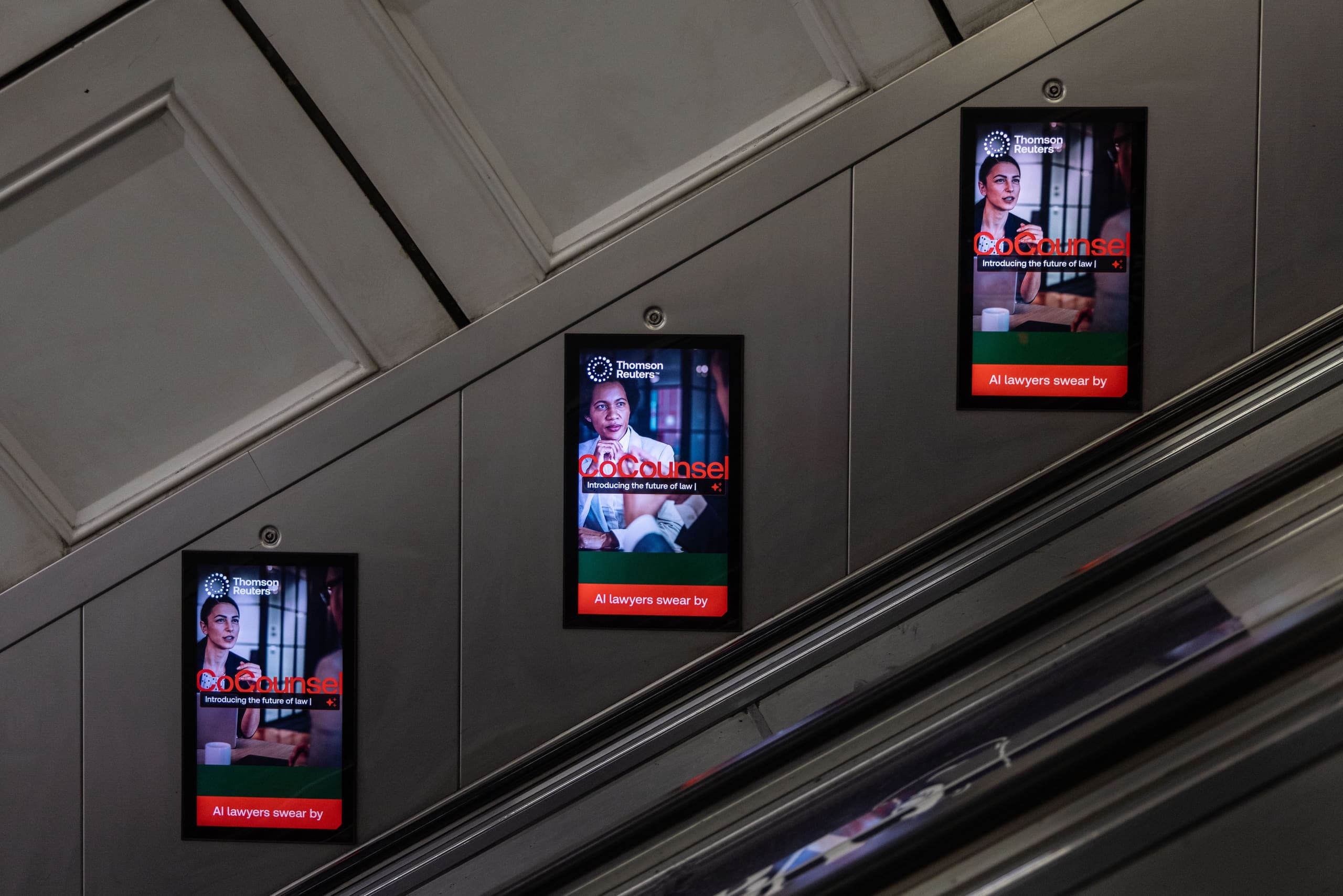
Sequential screens running the length of the escalator shaft, synchronised so one story plays out as the passenger descends.
From £25,000 per station run, per 2 weeks
Specification
- Format type
- digital
- Creative size
- 1920 x 1080 px (w × h), rotated for a portrait screen, 10 second slot
- Typical duration
- 2 weeks
- Dwell time
- The length of the escalator ride
- Where it appears
- Escalator shafts, available at most major stations
- Best for
- Brand awareness, Product launch
- Indicative cost
- £25,000 per station run, per 2 weeks
- Availability
- Stations carrying escalator screens, concentrated in zones 1 and 2. Site list confirmed at booking.
Example rate from our own campaign pricing, excluding VAT. Actual cost depends on station, dates, availability, volume and campaign requirements.
What it is
A run of digital screens set into the wall alongside an escalator, spaced so a passenger passes them one after another. They are sold as a station run rather than individually: you take the shaft, not a panel in it.
The escalator is what makes the format work. It moves at a fixed speed, so every passenger passes every screen in the same order, at the same pace, facing the same way. Almost no other advertising environment controls the order in which its audience sees things.
Why advertisers use it
Because the order is fixed, the panels can be treated as one piece of communication rather than the same advertisement repeated. A proposition can open on the first screen and resolve on the last, which is closer to a storyboard than a poster site.
Being digital, the run also takes multiple executions and day-parting, and it accepts artwork on a shorter lead time than anything printed. A campaign can change message between the morning and evening peak in the same station.
Cost
£25,000 per station run, per 2 weeks. Rates move with zone, station footfall and trading period: January and August are the softest, the Christmas run-in the hardest. That figure buys the whole run at one station for the fortnight, not a single screen — worth checking when comparing quotes, because some rates for this format are quoted per panel.
Whether that flexibility earns its cost depends on the campaign: digital and paper compared honestly.
Booking and lead time
Six to eight weeks ahead is the sweet spot: it protects both the price and the quality of the sites you get. Station dominations and peak trading periods need longer. Copy clearance sits ahead of the on-air date, so leave room for it in the schedule.
Designing for a moving audience
The frame is portrait and the reader is in motion, so each screen has to land in the couple of seconds it is in view. In practice that means one idea per panel and type that survives peripheral reading — not a layout that rewards study.
The sequence is the opportunity and the risk. A run designed as six variations on one execution wastes it; a run that depends on the passenger catching every panel in order will lose anyone who joins the escalator halfway down. The reliable shape is a sequence where each panel stands alone but gains from the ones before it.
Supplying to spec is only half of it: copy clearance sits ahead of the on-air date.
When not to buy it
This is a station format, not a network one. It concentrates spend where the escalators are — largely zones 1 and 2 — so it buys depth at chosen locations rather than coverage across London. If the brief is broad reach against a dispersed audience, in-carriage or poster formats do that job for less.
It also only exists where there are escalators. Shallow sub-surface stations and much of the outer network have none, so the station list is shorter than for any poster format and is confirmed at booking.
Stations to consider
Our inventory records show digital escalator panels at these stations. Individual sites and availability are confirmed with the media owner when we plan the campaign.
- Zone 1 · West End
Oxford Circus
3 lines
66.9m entries and exits (2023)
- Zone 1 · South Bank
Waterloo
4 lines
65.9m entries and exits (2023)
- Zone 1 · Victoria
Victoria
3 lines
63.4m entries and exits (2023)
- Zone 1 · City of London
Liverpool Street
5 lines
61.9m entries and exits (2023)
- Zone 1 · Paddington
Paddington
5 lines
41.5m entries and exits (2023)
- Zone 1 · West End
Tottenham Court Road
3 lines
34.6m entries and exits (2023)
Campaigns using digital escalator panels
Related formats
- digital
Digital gateways
Large portrait screens positioned at ticket hall entry, seen head on as passengers arrive.
From £12,000 per 2 weeks
- digital
Digital 6-sheet (D6)
Portrait screens at eye level in ticket halls, entrances and concourses, carrying five seconds of full motion.
From £1,500 per screen, per 2 weeks
- digital
Digital 12-sheet (D12)
The larger landscape screen in ticket halls and concourses, where a D6 is not enough presence.
From £3,000 per screen, per 2 weeks
Digital escalator panels questions.
£25,000 per station run, per 2 weeks. That is indicative planning guidance excluding production and VAT, and it moves with zone, station and trading period.
2 weeks is the standard booking, running Monday to Sunday. Longer flights are available and usually attract a volume discount.
1920 x 1080 px, rotated for a portrait screen, 10 second slot. Artwork goes through copy clearance before the on-air date, so allow time in the schedule for it.
Escalator shafts, available at most major stations. Stations carrying escalator screens, concentrated in zones 1 and 2. Site list confirmed at booking.
Get digital escalator panels costs.
Send the brief and we come back with a site list, costs and on-air dates within two working days.
Get campaign costs