Escalator panels (static) advertising
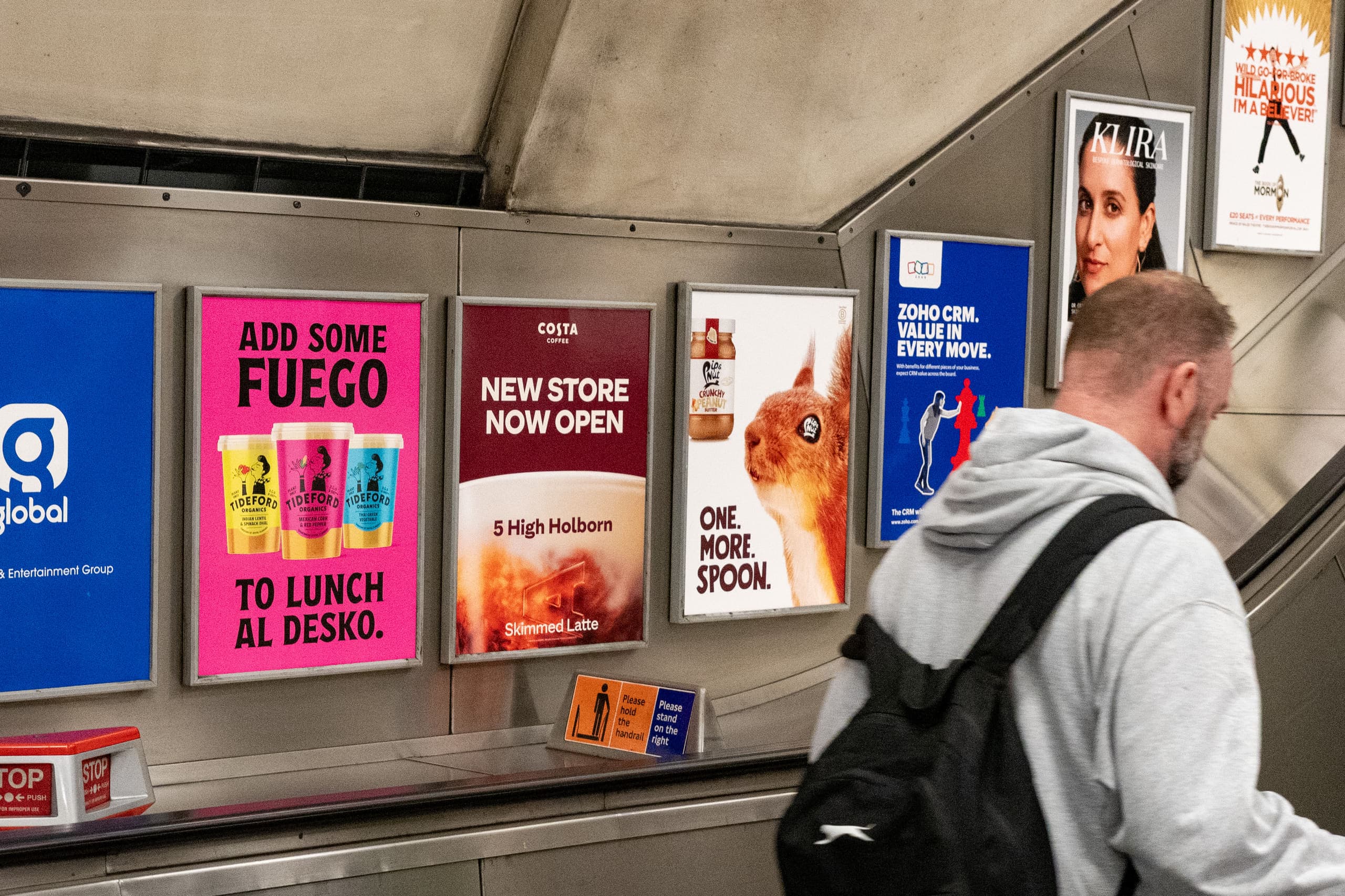
Paper panels running alongside the escalator, telling a story one frame at a time on the way down.
From £300 per panel, per 2 weeks
Specification
- Format type
- static
- Creative size
- 419 x 572 mm (w × h)
- Typical duration
- 2 weeks
- Dwell time
- The length of the escalator ride
- Where it appears
- Escalator shafts, available at most major stations
- Best for
- Sequential storytelling
- Indicative cost
- £300 per panel, per 2 weeks
- Availability
- Most major stations carry escalator panels. Sold by the panel with a minimum quantity, so a booking covers a meaningful stretch of the shaft rather than a single frame.
- Booking conditions
- Includes print and production. Minimum 10 panels per booking.
Example rate from our own campaign pricing, excluding VAT. Actual cost depends on station, dates, availability, volume and campaign requirements.
What it is
Printed panels set into the wall alongside an escalator, at 419 by 572mm each — a good deal smaller than a 4-sheet poster, and read from a few feet away as the escalator carries you past. They are sold by the panel with a minimum of ten, so a booking covers a stretch of the shaft rather than a single frame.
The escalator does the work. It moves at a fixed speed, so every passenger passes every panel in the same order at the same pace, and the run reads as a sequence whether or not it was designed as one.
Why advertisers use it
The ten-panel minimum is the format, not a hurdle. A single panel beside an escalator is a poster someone glides past; ten in a row is a sustained piece of communication delivered at a pace the advertiser controls rather than the reader.
It is also the cheapest way on the network to buy that mechanic. Panel for panel this is the lowest rate we hold, and the rate includes print and posting — so a full run costs a fraction of what the digital equivalent does at the same station.
Cost
£300 per panel, per 2 weeks. Rates move with zone, station footfall and trading period: January and August are the softest, the Christmas run-in the hardest. Print and posting are inside the panel rate, and the ten-panel minimum sets the real entry point rather than the single-panel figure.
The right choice depends on the job, not the format — compare them on what each is for.
Booking and lead time
Six to eight weeks ahead is the sweet spot: it protects both the price and the quality of the sites you get. Station dominations and peak trading periods need longer. Copy clearance sits ahead of the on-air date, so leave room for it in the schedule.
Designing a run, not a poster
The frames arrive in a known order at a known pace, which is the opportunity. A run can build — a proposition stated, developed, then resolved — in a way a single site cannot. What does not work is ten identical panels: the reader has already taken the message by the third, and the remaining seven are paid-for repetition.
Each panel still has to stand on its own, because passengers join the escalator at different points and some are travelling the other way. The reliable structure is a sequence where every frame makes sense alone and gains from the ones before it.
Supplying to spec is only half of it: copy clearance sits ahead of the on-air date.
Paper or digital on the escalator?
The digital version of this position takes multiple executions, accepts artwork on a shorter lead time and carries motion. Paper takes one execution, held for the flight, and costs substantially less for the same stretch of wall.
So the question is whether the campaign needs to change during the run. If it does, the digital panels earn their premium. If one sequence is going to run for the fortnight, paper buys the same mechanic and the same audience for less.
Stations to consider
Our inventory records show escalator panels (static) at these stations. Individual sites and availability are confirmed with the media owner when we plan the campaign.
- Zone 1 · King's Cross
King's Cross St Pancras
6 lines
70.3m entries and exits (2023)
- Zone 1 · West End
Oxford Circus
3 lines
66.9m entries and exits (2023)
- Zone 1 · South Bank
Waterloo
4 lines
65.9m entries and exits (2023)
- Zone 1 · Victoria
Victoria
3 lines
63.4m entries and exits (2023)
- Zone 1 · City of London
Liverpool Street
5 lines
61.9m entries and exits (2023)
- Zone 1 · London Bridge
London Bridge
2 lines
50.2m entries and exits (2023)
Campaigns using escalator panels (static)
Related formats
- static
Tube car panels
Interior panels above the seat line, read across a full journey by an audience with nowhere else to look.
From £18 per panel, per 2 weeks
- static
16-sheet cross-track
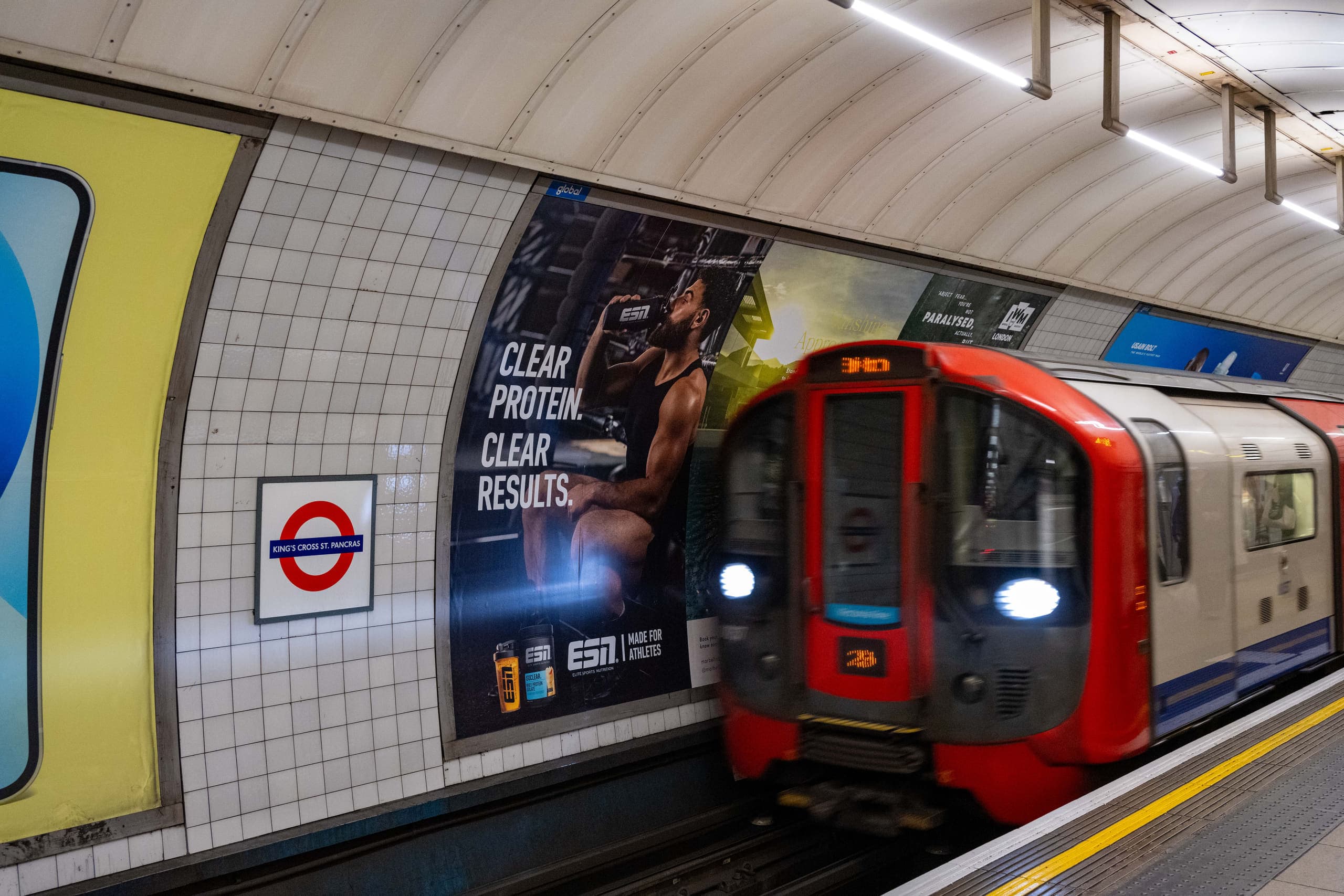
Facing the platform from the opposite wall, read across the track for the whole wait.
From £2,250 per panel, per 2 weeks
- static
48-sheet posters
Cross-track large format, facing the platform from the opposite wall and read for the whole wait.
From £6,000 per panel, per 2 weeks
Escalator panels (static) questions.
£300 per panel, per 2 weeks. That is indicative planning guidance including print and production but excluding VAT, and it moves with zone, station and trading period.
2 weeks is the standard booking, running Monday to Sunday. Longer flights are available and usually attract a volume discount.
419 x 572 mm. Artwork goes through copy clearance before the on-air date, so allow time in the schedule for it.
Escalator shafts, available at most major stations. Most major stations carry escalator panels. Sold by the panel with a minimum quantity, so a booking covers a meaningful stretch of the shaft rather than a single frame.
Get escalator panels (static) costs.
Send the brief and we come back with a site list, costs and on-air dates within two working days.
Get campaign costs