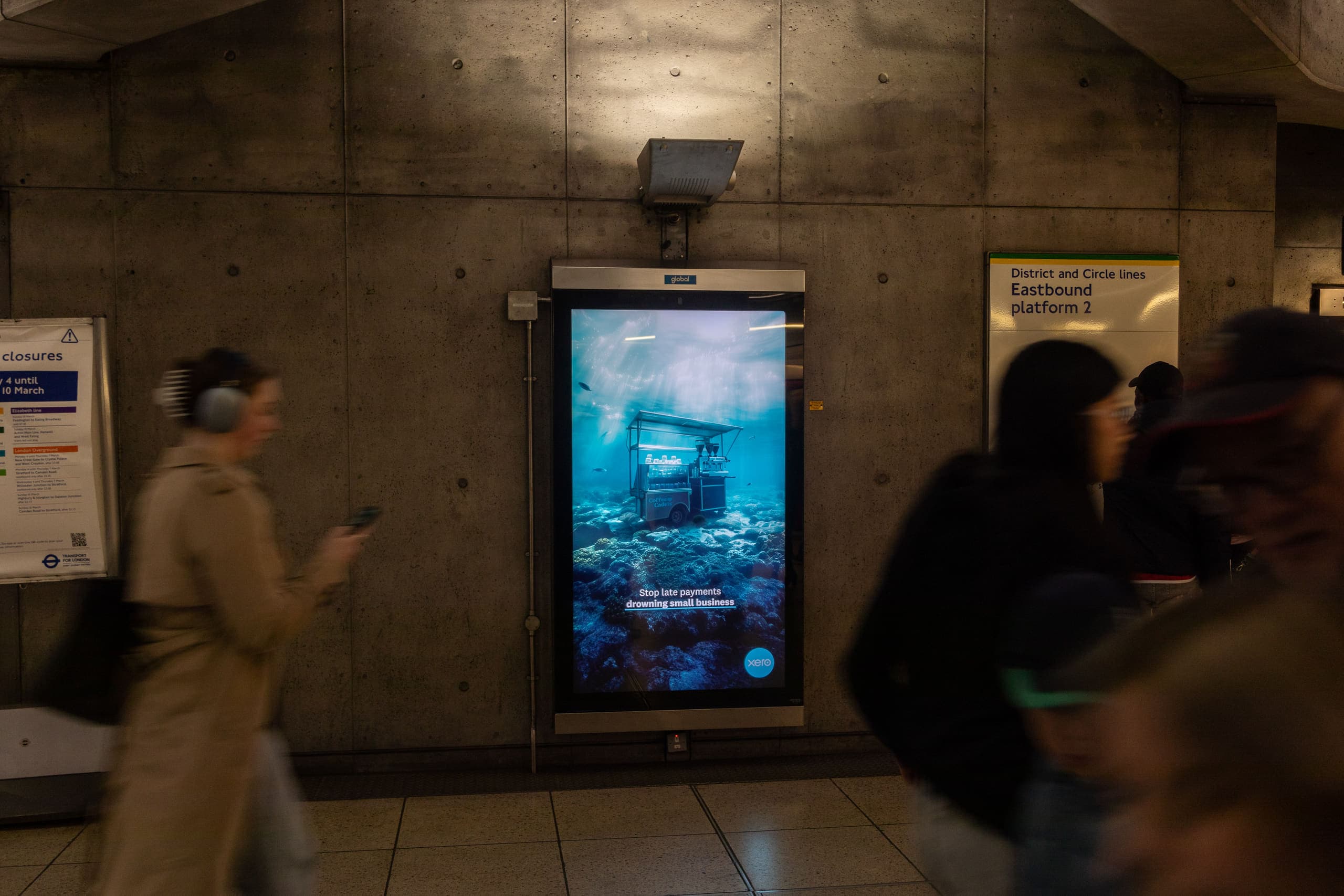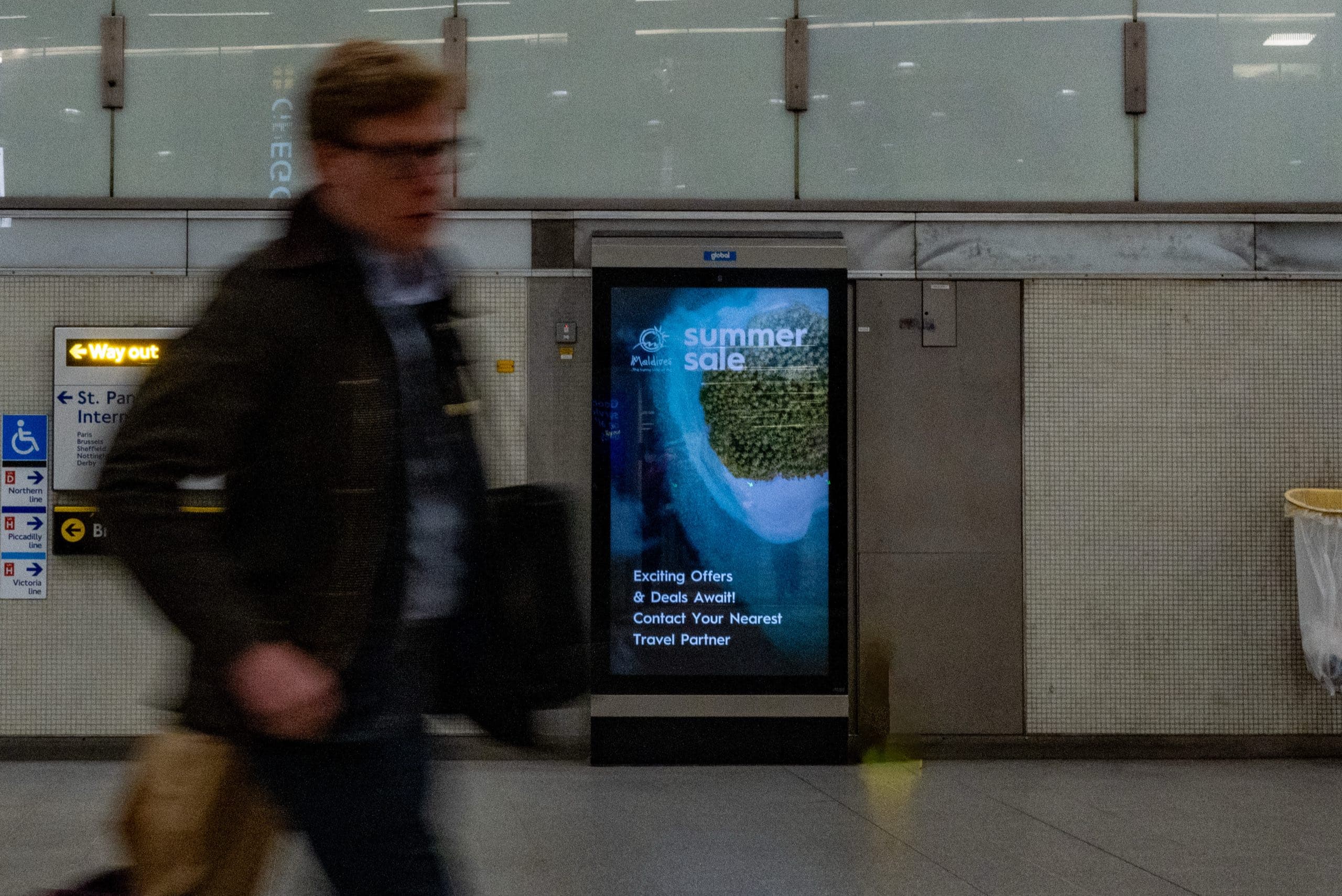
Digital costs more per site than paper. Whether that premium is worth paying comes down to four questions, and for a good number of campaigns the honest answer is no.
The four questions
- Do you need more than one execution? Digital carries several in one booking; paper carries one.
- Does the message change by time of day? Day-parting is the clearest thing the premium buys.
- Is the lead time short? Digital books later than paper, because there is nothing to print and post.
- Might the copy change mid-flight? Only digital can.
What the premium actually buys
It helps to be precise about what you are paying for, because it is not picture quality. A digital site costs more per panel than the paper equivalent, and in exchange it can hold several executions in one booking, change what it shows by time of day, and be booked closer to the start date. If a campaign uses none of those, the extra cost has bought nothing the campaign needed.
The trade in the other direction is share of time. A paper site is yours for the whole fortnight and is showing your work every second someone is in front of it. A digital site rotates through a loop with other advertisers, so you hold a share of the time in front of the screen rather than all of it. Neither arrangement is better in the abstract — but they are different things, and comparing a per-panel digital rate with a per-panel paper rate without accounting for it will mislead you.
What paper still does better
Scale, mostly. The largest sites on the network are paper — 48-sheets and 96-sheets on platform and escalator hall walls. Paper is also always on: a digital site shares its loop with other advertisers, so a share of the dwell time in front of the screen is not yours.
What digital does better
Motion, flexibility and timing. Sequential escalator screens can play one story down the shaft in a way paper approximates but does not match, and a campaign that needs to respond to something — weather, a result, a launch date moving — has no paper equivalent.
It does not have to be one or the other
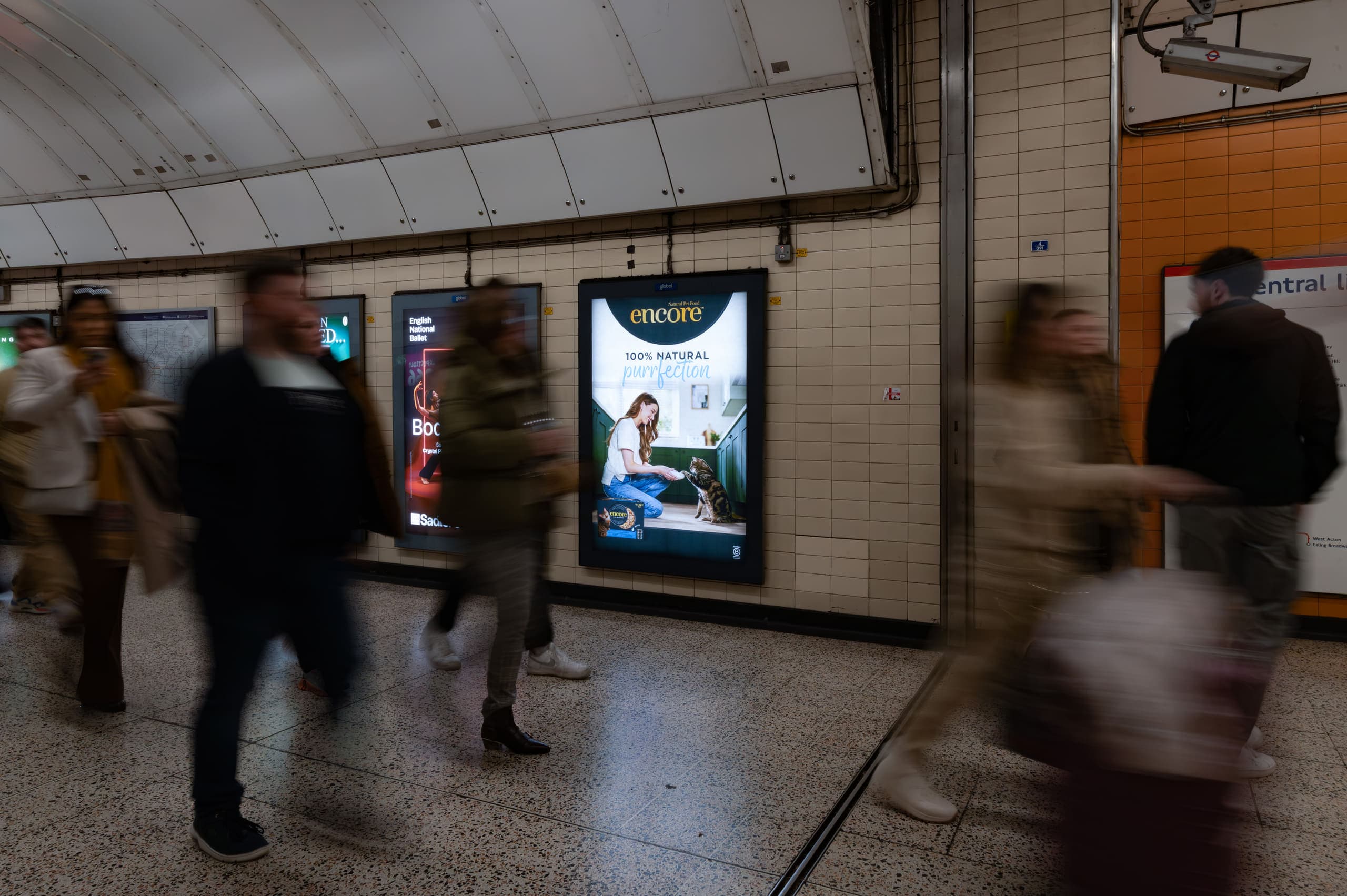
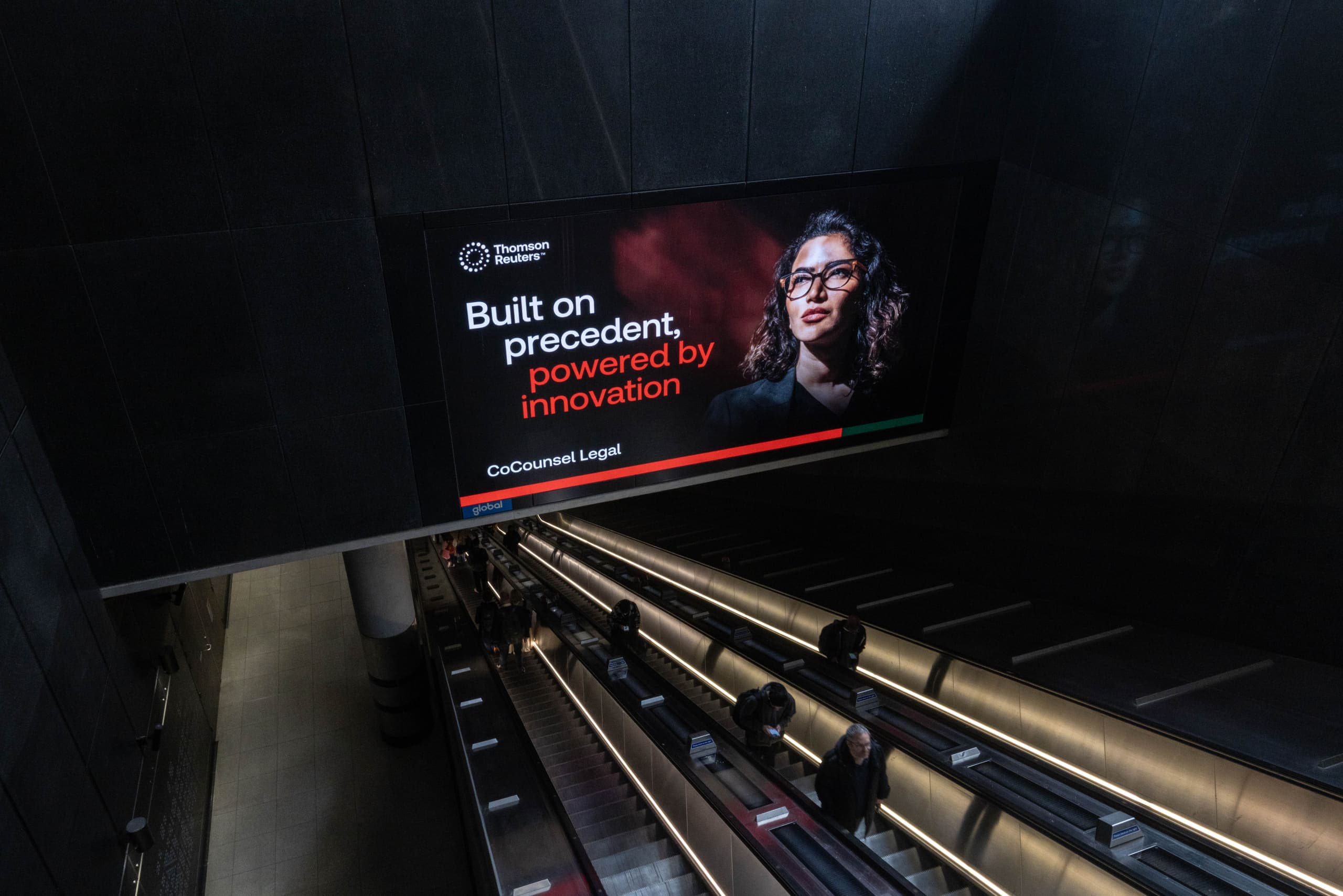
Most plans of any size run both, and the split usually follows the job rather than a principle. Paper takes the scale and the long dwell positions; digital takes the moments where timing or a second execution earns its keep. The Thomson Reuters campaign ran digital escalator panels, digital 12-sheets and a gateway together across two stations; the Encore campaign ran one artwork as a paper 6-sheet and a cross-track poster. Both are coherent, and neither started from a rule about screens.
Sources and references
- Media owner rate cards — Every price on this site is indicative planning guidance, confirmed with the media owner at booking.