16-sheet cross-track advertising
Facing the platform from the opposite wall, read across the track for the whole wait.
From £2,250 per panel, per 2 weeks
Specification
- Format type
- static
- Creative size
- 2032 x 3048 mm (w × h)
- Typical duration
- 2 weeks
- Dwell time
- 3 minutes average platform dwell
- Where it appears
- Platform trackside walls
- Best for
- Brand awareness
- Indicative cost
- £2,250 per panel, per 2 weeks
- Availability
- Platforms with a trackside wall opposite. Deep tube platforms carry fewer sites than sub-surface ones.
- Booking conditions
- Includes print and production.
TfL, London Underground Station Design Idiom
Example rate from our own campaign pricing, excluding VAT. Actual cost depends on station, dates, availability, volume and campaign requirements.
What it is
A 16-sheet is a portrait poster site — 2,032mm wide by 3,048mm tall, so taller than the person looking at it — mounted on the trackside wall facing a platform. It is bought by the panel, and the rate covers print and posting as well as the space.
The defining feature is where it is: on the other side of the rails. A passenger waiting on the platform is looking at it across the track, and cannot walk up to it, stand under it or move past it. It is the one Underground format the audience meets at a fixed distance.
Why advertisers use it
That fixed distance is the whole proposition. Platform waiting is time spent facing the opposite wall with the advertising on it, and a cross-track site is one of the few things in that field of view. TfL’s own design guidance puts average platform dwell at three minutes, which describes the environment the format sits in — not how long anyone spends looking at a poster.
It also buys presence at a chosen station rather than across a network. Because sites are bought by the panel, a campaign can hold several positions on one platform or a single position each at a list of stations, which makes it one of the more controllable ways to put a brand somewhere specific.
Cost
£2,250 per panel, per 2 weeks. Rates move with zone, station footfall and trading period: January and August are the softest, the Christmas run-in the hardest. Unusually for the network, print and posting are inside that figure rather than quoted on top — which is worth holding in mind when comparing it against digital rates, where artwork is a separate studio cost.
For how this sits against the rest of the range, see every format side by side.
Booking and lead time
Six to eight weeks ahead is the sweet spot: it protects both the price and the quality of the sites you get. Station dominations and peak trading periods need longer. Copy clearance sits ahead of the on-air date, so leave room for it in the schedule.
Designing to be read across a track
Everything about the creative follows from the viewing distance. Type set for a poster someone walks past will be too small here, and detail that rewards a close look is wasted. The photography we hold of this format shows the same pattern on every platform: the executions that hold up are the ones with one idea, a short line and strong tonal contrast against a tiled wall.
The portrait shape matters too. At two units wide to three tall this is a standing format, not a banner, so a horizontal lock-up will fight it. Compositions that stack — image above, line below — sit in the frame more comfortably than anything asking to be read left to right.
There is also an interruption to plan around that no specification sheet mentions: trains. When a train is standing at the platform it can temporarily obscure the sites behind it, so the view of a cross-track poster comes and goes with the service. Creative that depends on several seconds of uninterrupted attention is the wrong creative for this wall.
For the approval chain and the artwork rules, see how to pass copy clearance first time.
What to know before buying it
The format needs a platform with a wall opposite, and not every platform has one that carries sites. Deep tube platforms have fewer than sub-surface ones, so the list of available positions is shorter than the number of stations on the network and is confirmed at booking rather than assumed.
You are also one of several. Our photography of cross-track runs shows sites in sequence carrying different advertisers along the same wall, which is normal for the format and the opposite of what a station domination buys. If the requirement is to be the only voice in the space, this is not the format that does it.
Cross-track, or something else?
Against the larger poster formats, the question is shape and position rather than price. A 48-sheet or 96-sheet is a wider unit and buys width along a wall; a 16-sheet is a standing panel and buys a position directly in the eyeline of the platform opposite. If the creative is a landscape scene, the wider formats suit it better; if it is a product, a portrait figure or a stacked message, this one does.
Against the digital formats, the trade is flexibility for cost and placement. A digital 6-sheet or 12-sheet takes multiple executions, day-parting and a shorter lead time, but those sit in ticket halls and concourses, where the audience is moving through rather than waiting. Cross-track is the platform equivalent, and it is paper: one execution, no day-parting, print included.
Stations to consider
Our inventory records show 16-sheet cross-track at these stations. Individual sites and availability are confirmed with the media owner when we plan the campaign.
- Zone 1 · King's Cross
King's Cross St Pancras
6 lines
70.3m entries and exits (2023)
- Zone 1 · West End
Oxford Circus
3 lines
66.9m entries and exits (2023)
- Zone 1 · South Bank
Waterloo
4 lines
65.9m entries and exits (2023)
- Zone 1 · Victoria
Victoria
3 lines
63.4m entries and exits (2023)
- Zone 1 · City of London
Liverpool Street
5 lines
61.9m entries and exits (2023)
- Zone 1 · London Bridge
London Bridge
2 lines
50.2m entries and exits (2023)
Campaigns using 16-sheet cross-track
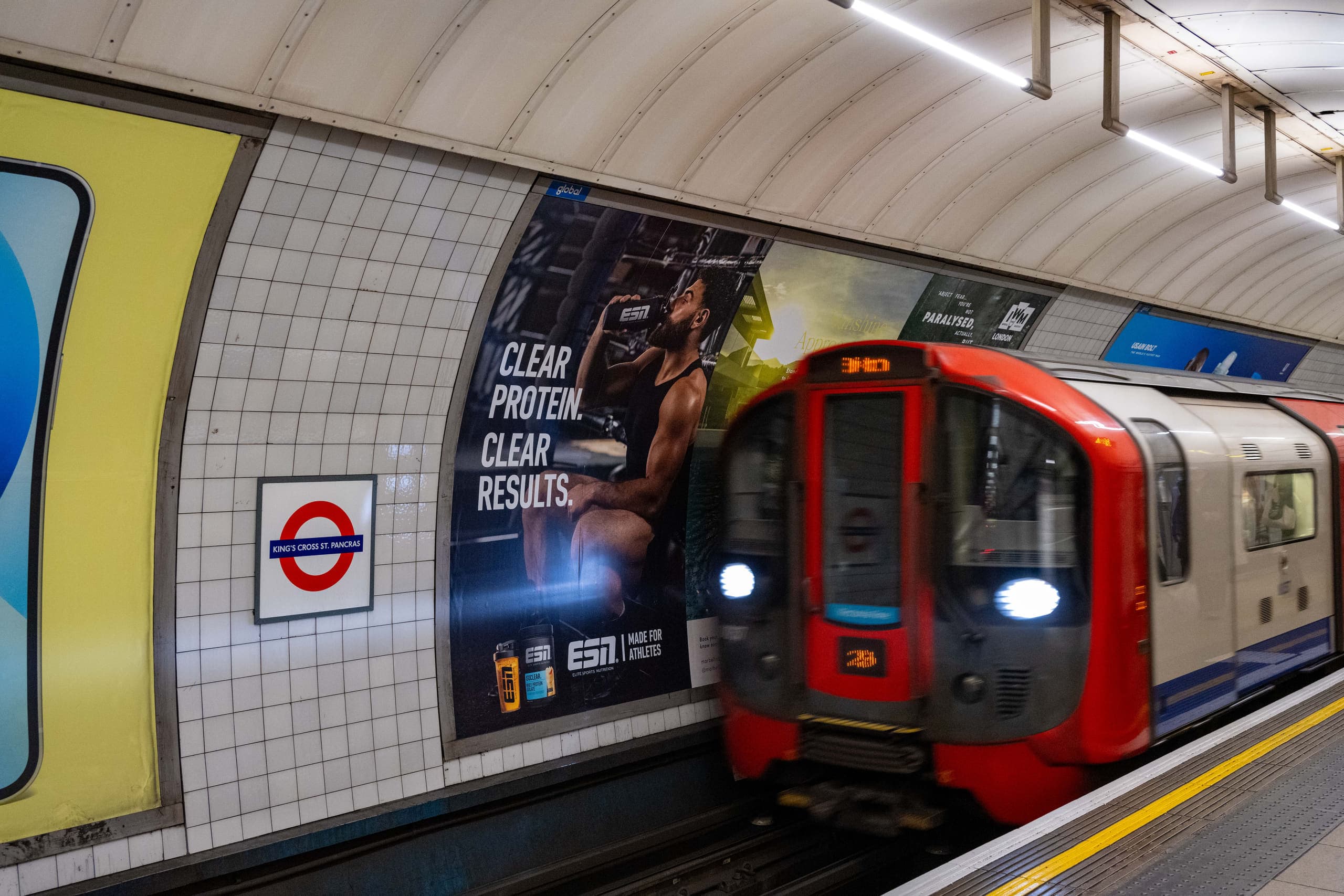
ESN Sports nutrition · Product launchESN launches into a saturated protein market
An eight week national burst with the Underground at its centre: cross-track at King's Cross, car panels across the line packs and escalator panels alongside.
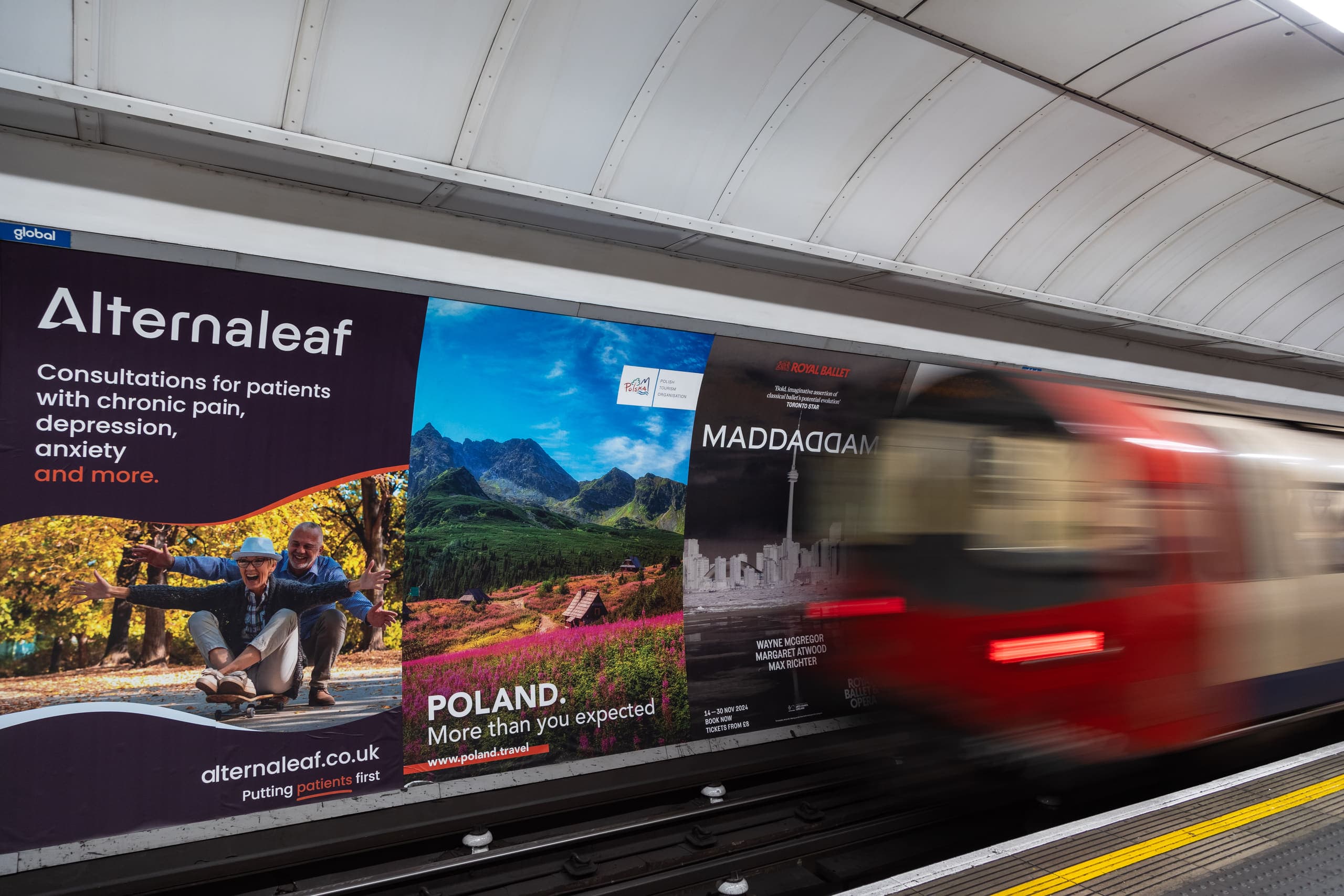
Polish Tourism Organisation Travel and tourism · Brand awarenessPolish Tourism buys scale across the network
Cross-track posters at tourist stations paired with car panels inside the trains, bought for coverage rather than concentration.
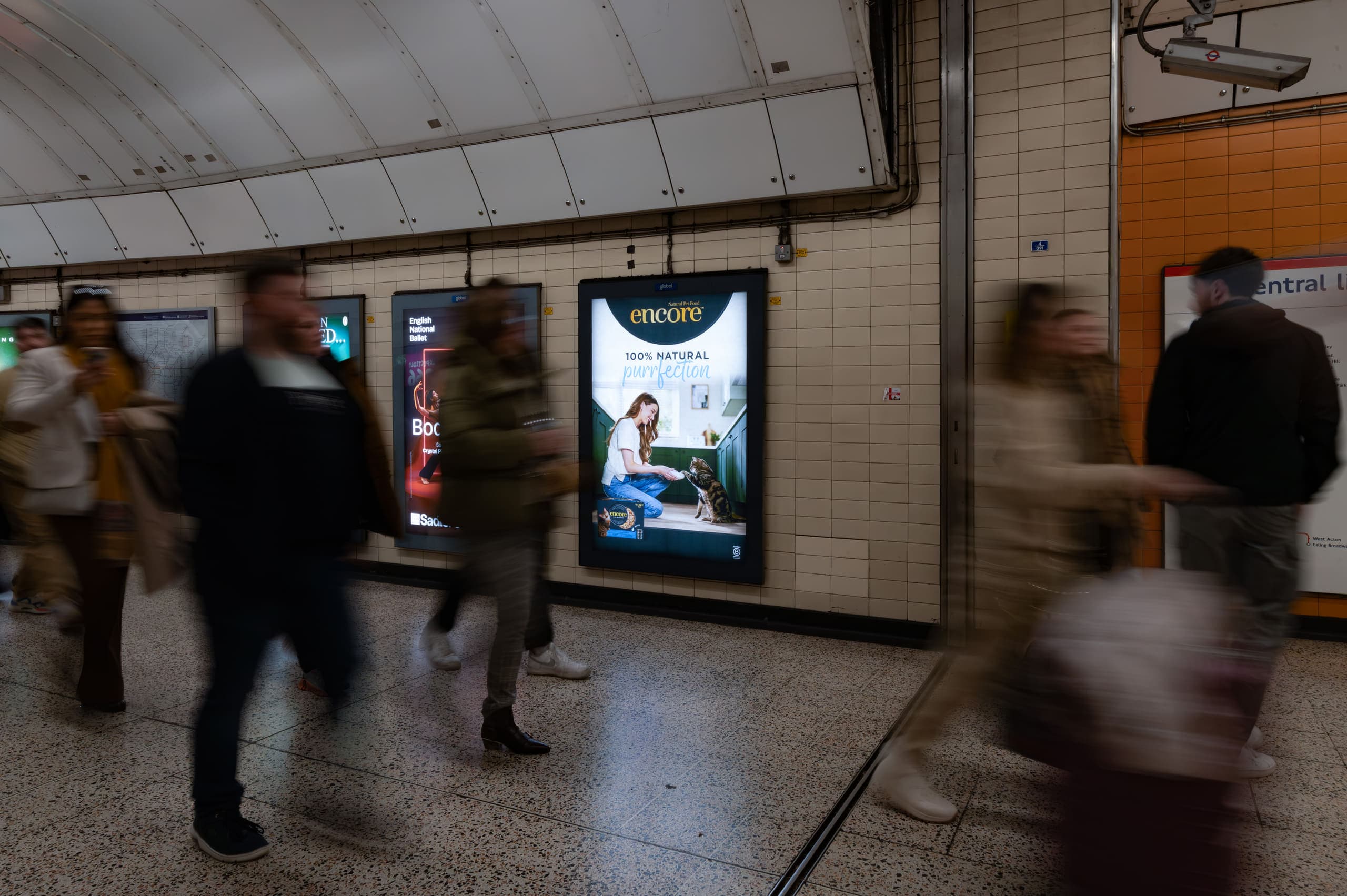
Encore FMCG · Retail footfallEncore on 6-sheet posters at Bond Street
One portrait artwork running as a backlit 6-sheet and as a cross-track poster, photographed at four stations.
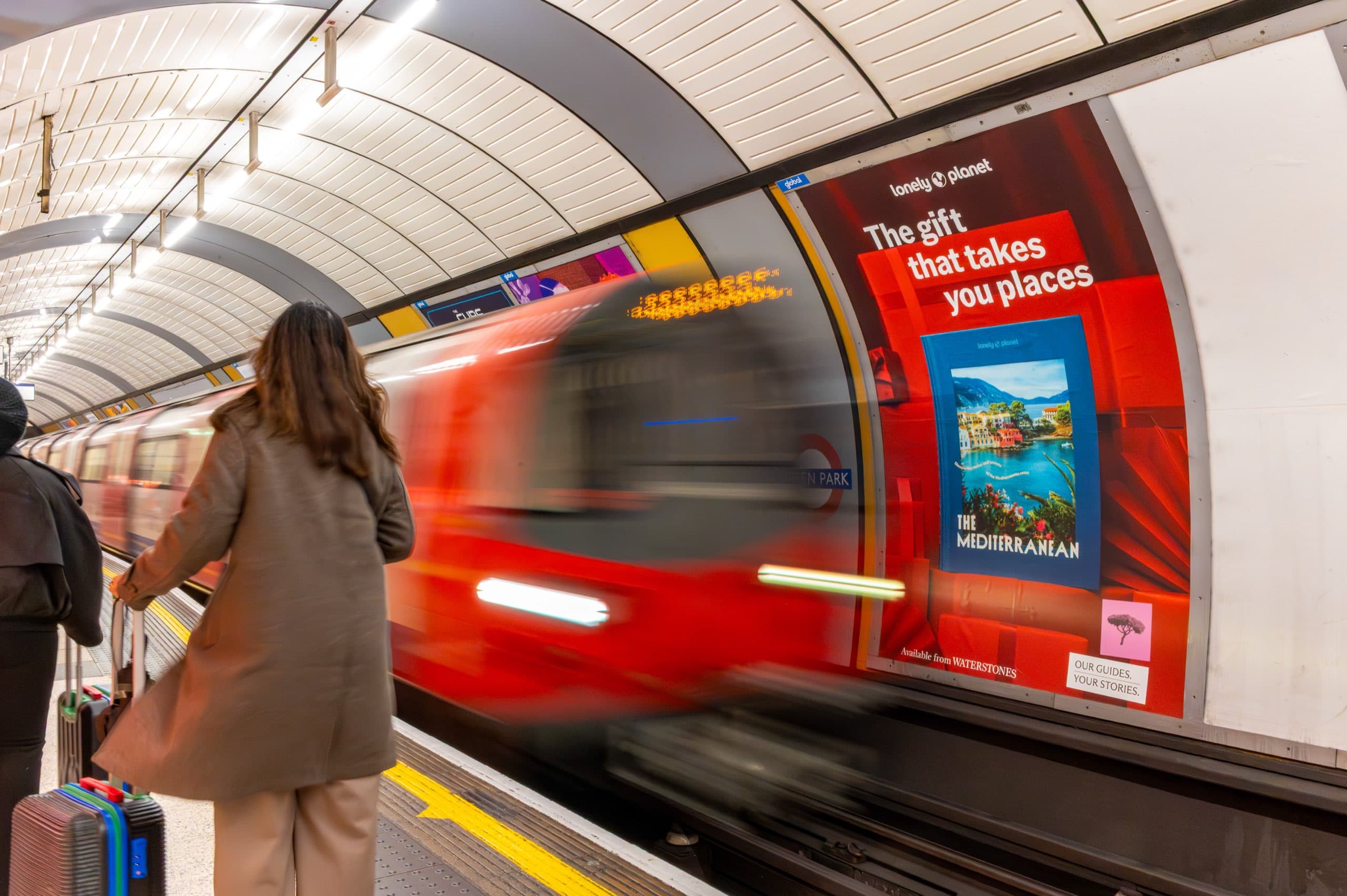
Lonely Planet Travel publishing · Christmas giftingLonely Planet turns the platform wait into a gift list
A cross-track poster at Green Park putting the guidebook range in front of commuters and shoppers in the run-up to Christmas, in the one place a travel idea has time to land.
Related formats
- static
Tube car panels
Interior panels above the seat line, read across a full journey by an audience with nowhere else to look.
From £18 per panel, per 2 weeks
- static
48-sheet posters
Cross-track large format, facing the platform from the opposite wall and read for the whole wait.
From £6,000 per panel, per 2 weeks
- static
12-sheet posters
Landscape paper at platform level, large enough to read from across the platform without buying cross-track scale.
From £2,000 per panel, per 2 weeks
16-sheet cross-track questions.
£2,250 per panel, per 2 weeks. That is indicative planning guidance including print and production but excluding VAT, and it moves with zone, station and trading period.
2 weeks is the standard booking, running Monday to Sunday. Longer flights are available and usually attract a volume discount.
2032 x 3048 mm. Artwork goes through copy clearance before the on-air date, so allow time in the schedule for it.
Platform trackside walls. Platforms with a trackside wall opposite. Deep tube platforms carry fewer sites than sub-surface ones.
Get 16-sheet cross-track costs.
Send the brief and we come back with a site list, costs and on-air dates within two working days.
Get campaign costs