48-sheet posters advertising
Cross-track large format, facing the platform from the opposite wall and read for the whole wait.
From £6,000 per panel, per 2 weeks
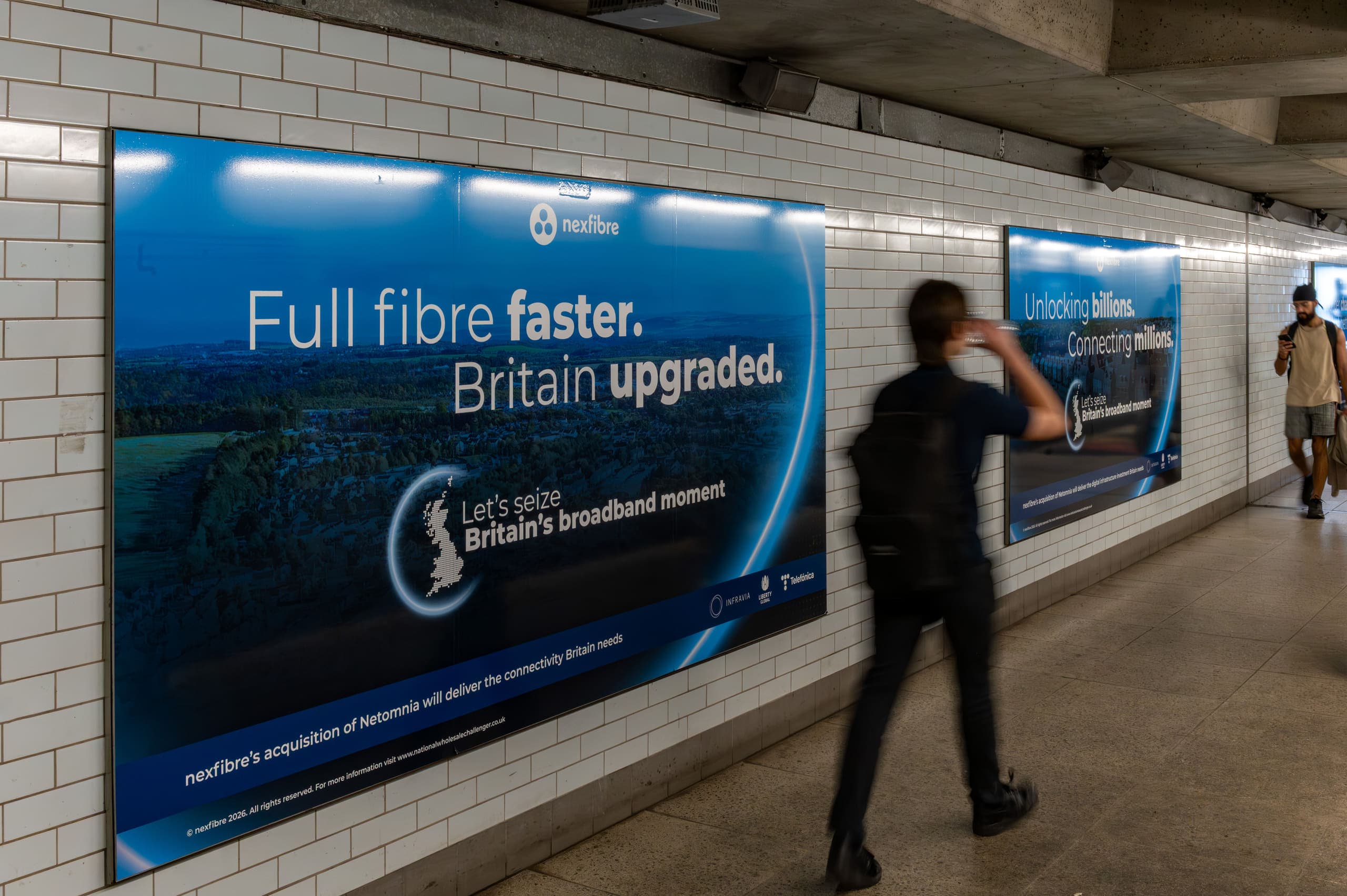
Specification
- Format type
- static
- Creative size
- 6060 x 3048 mm (w × h)
- Typical duration
- 2 weeks
- Dwell time
- 3 minutes average platform dwell
- Where it appears
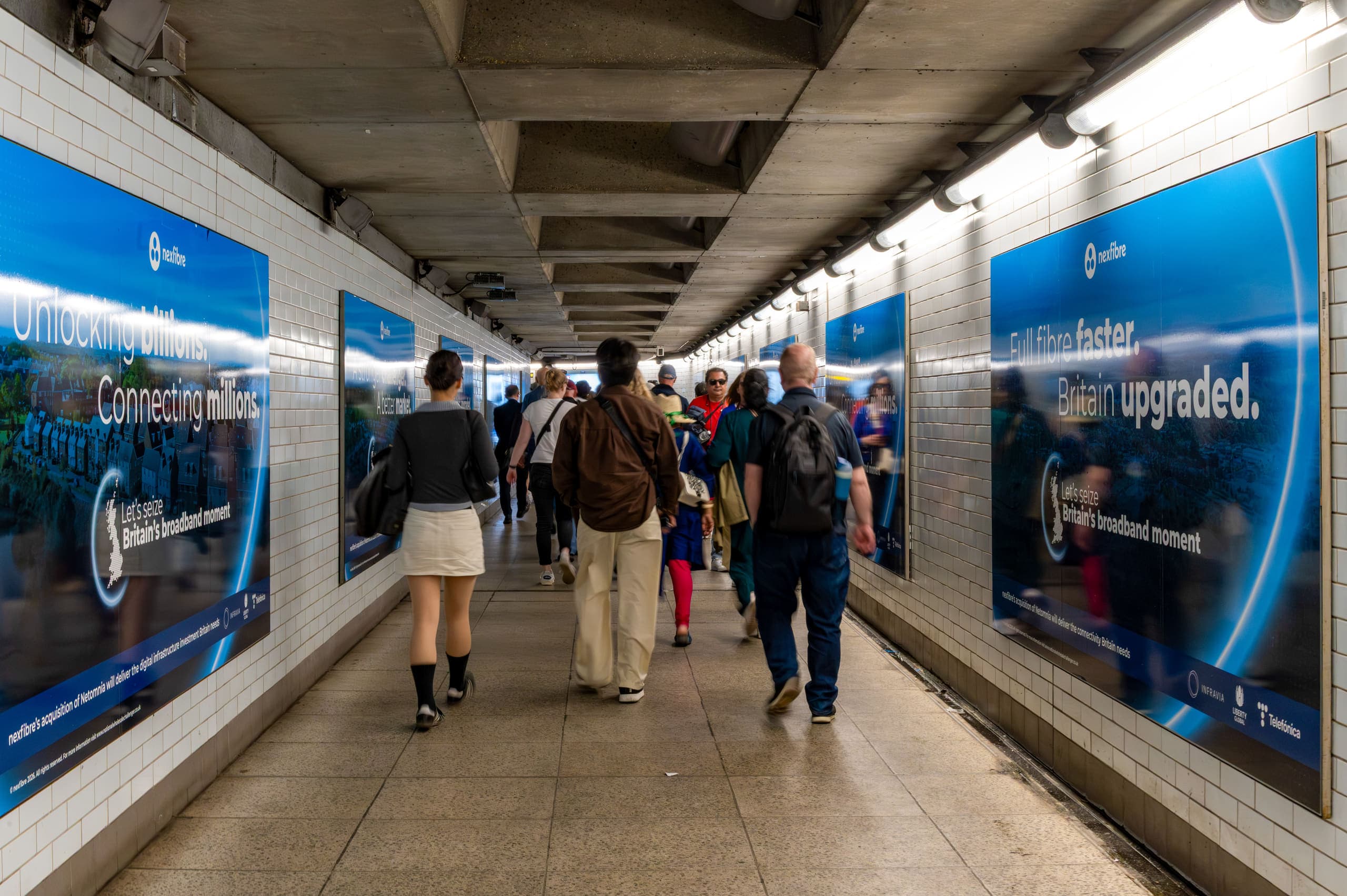
- Platform trackside walls and escalator halls
- Best for
- Impact at interchanges
- Indicative cost
- £6,000 per panel, per 2 weeks
- Availability
- Larger stations and interchanges, where the wall runs are long enough to carry the format.
- Booking conditions
- Includes print and production.
TfL, London Underground Station Design Idiom
Example rate from our own campaign pricing, excluding VAT. Actual cost depends on station, dates, availability, volume and campaign requirements.
What it is
The large-format printed poster on the wall facing an Underground platform, read across the track. It is bought by the panel and the rate includes print and posting.
Scale is what separates it from the other cross-track sites. Where a 16-sheet is a standing panel, a 48-sheet occupies a long run of wall, which is why it is limited to larger stations and interchanges where the trackside wall is long enough to carry one.
Why advertisers use it
It is bought when the requirement is presence rather than reach. One 48-sheet at a station makes an unmissable statement in that space, and at nearly three times the panel rate of a 16-sheet the buy is deliberately concentrated rather than spread.
The environment field also lists escalator halls alongside platform trackside walls, so the format is not exclusively a cross-track buy — the available positions at a given station are confirmed with the media owner at booking.
Cost
£6,000 per panel, per 2 weeks. Rates move with zone, station footfall and trading period: January and August are the softest, the Christmas run-in the hardest. Print and posting are included. The figure is per panel, so a two-site campaign is twice the number shown, and the site list rather than the rate is what usually determines the budget.
For how this sits against the rest of the range, see every format side by side.
Booking and lead time
Six to eight weeks ahead is the sweet spot: it protects both the price and the quality of the sites you get. Station dominations and peak trading periods need longer. Copy clearance sits ahead of the on-air date, so leave room for it in the schedule.
Filling a wall without shouting
The unit is wide, so a composition can run horizontally in a way the portrait cross-track formats cannot. That suits a scene, a product line-up or a headline that wants space to breathe, and it is the reason a 48-sheet execution rarely translates from a 16-sheet artwork without redrawing.
Viewing distance still governs everything. The reader is across the track and cannot approach, so type set for a poster passed at close range will not carry. Larger is not an invitation to add detail: it is an invitation to make one idea bigger.
For the approval chain and the artwork rules, see how to pass copy clearance first time.
48-sheet or 16-sheet?
Both face the platform from the opposite wall, and the choice is shape and concentration rather than quality. A 16-sheet is a portrait panel and costs less per site, so the same budget buys a position at several stations. A 48-sheet is a wide unit at a higher rate, which buys one commanding presence instead of several ordinary ones.
Availability separates them too. Cross-track 16-sheets exist wherever a platform has a wall opposite; a 48-sheet needs a long enough run of it, which limits the format to larger stations and interchanges.
Stations to consider
Our inventory records show 48-sheet posters at these stations. Individual sites and availability are confirmed with the media owner when we plan the campaign.
- Zone 1 · King's Cross
King's Cross St Pancras
6 lines
70.3m entries and exits (2023)
- Zone 1 · West End
Oxford Circus
3 lines
66.9m entries and exits (2023)
- Zone 1 · South Bank
Waterloo
4 lines
65.9m entries and exits (2023)
- Zone 1 · Victoria
Victoria
3 lines
63.4m entries and exits (2023)
- Zone 1 · City of London
Liverpool Street
5 lines
61.9m entries and exits (2023)
- Zone 1 · London Bridge
London Bridge
2 lines
50.2m entries and exits (2023)
Campaigns using 48-sheet posters
Related formats
- static
Tube car panels
Interior panels above the seat line, read across a full journey by an audience with nowhere else to look.
From £18 per panel, per 2 weeks
- static
16-sheet cross-track
Facing the platform from the opposite wall, read across the track for the whole wait.
From £2,250 per panel, per 2 weeks
- static
12-sheet posters
Landscape paper at platform level, large enough to read from across the platform without buying cross-track scale.
From £2,000 per panel, per 2 weeks
48-sheet posters questions.
£6,000 per panel, per 2 weeks. That is indicative planning guidance including print and production but excluding VAT, and it moves with zone, station and trading period.
2 weeks is the standard booking, running Monday to Sunday. Longer flights are available and usually attract a volume discount.
6060 x 3048 mm. Artwork goes through copy clearance before the on-air date, so allow time in the schedule for it.
Platform trackside walls and escalator halls. Larger stations and interchanges, where the wall runs are long enough to carry the format.
Get 48-sheet posters costs.
Send the brief and we come back with a site list, costs and on-air dates within two working days.
Get campaign costs