Most artwork problems on the Underground are avoidable and expensive. This covers the specifications, the clearance process and the things that get work rejected.
Specifications
Every format has its own specification, and within a pack individual sites can differ. Confirm the specification for each site before artwork goes into production rather than designing to a generic size and adapting later.
| Format | Type | Creative size | Dwell | Indicative cost |
|---|---|---|---|---|
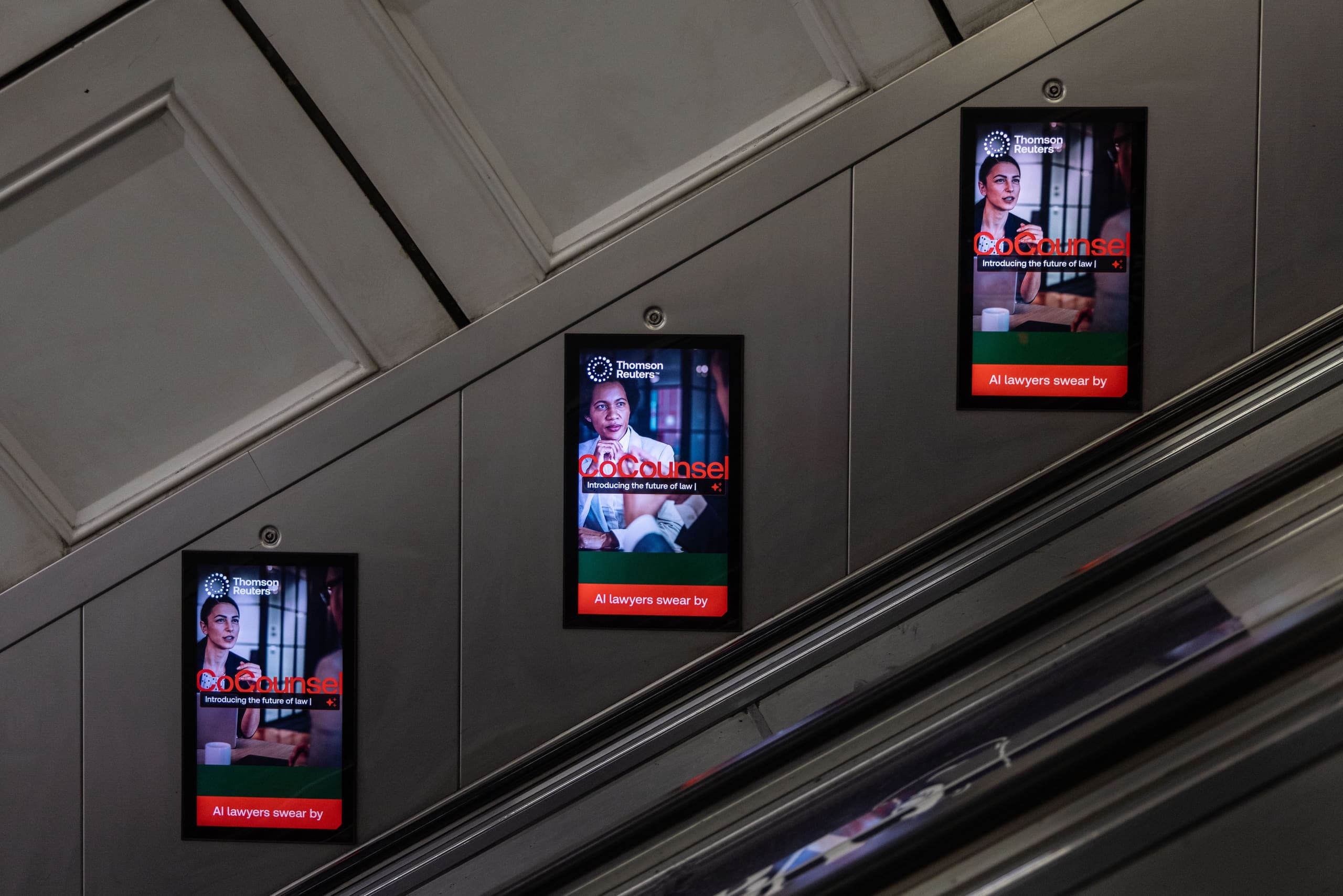
| Digital escalator panels | Typedigital | Creative size1920 x 1080 px (w × h), rotated for a portrait screen, 10 second slot | DwellThe length of the escalator ride | Indicative cost£25,000 per station run, per 2 weeks |
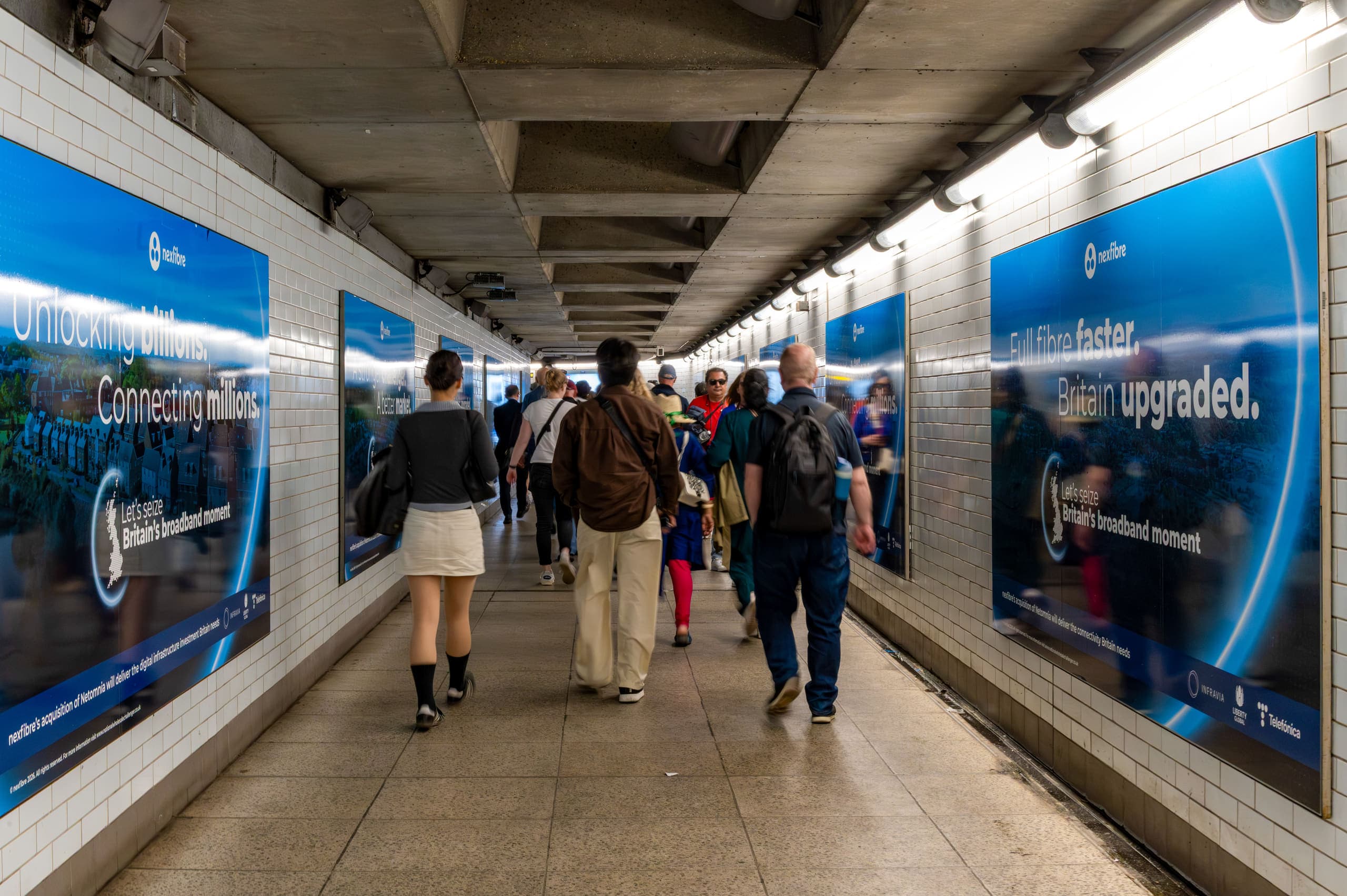
| Digital gateways | Typedigital | Creative sizeLandscape, resolution varies by station | DwellHead-on, as passengers enter the ticket hall | Indicative cost£12,000 to £40,000 per 2 weeks |
| Digital 6-sheet (D6) | Typedigital | Creative size1920 x 1080 px (w × h), rotated for a portrait screen, 5 second slot | DwellAt eye level, while passing through | Indicative cost£1,500 per screen, per 2 weeks |
| Digital 12-sheet (D12) | Typedigital | Creative size3840 x 2160 px (w × h), 10 second slot | DwellAt eye level, while passing through | Indicative cost£3,000 per screen, per 2 weeks |
| Digital 48-sheet (D48) | Typedigital | Creative size1920 x 1200 px (w × h), 10 second slot | DwellThe full platform wait | Indicative cost£2,000 per panel, per 2 weeks |
| Digital ribbon | Typedigital | Creative size1920 x 1080 px (w × h) per screen, 10 second slot | DwellThe length of the escalator ride | Indicative cost£35,000 per run, per 2 weeks |
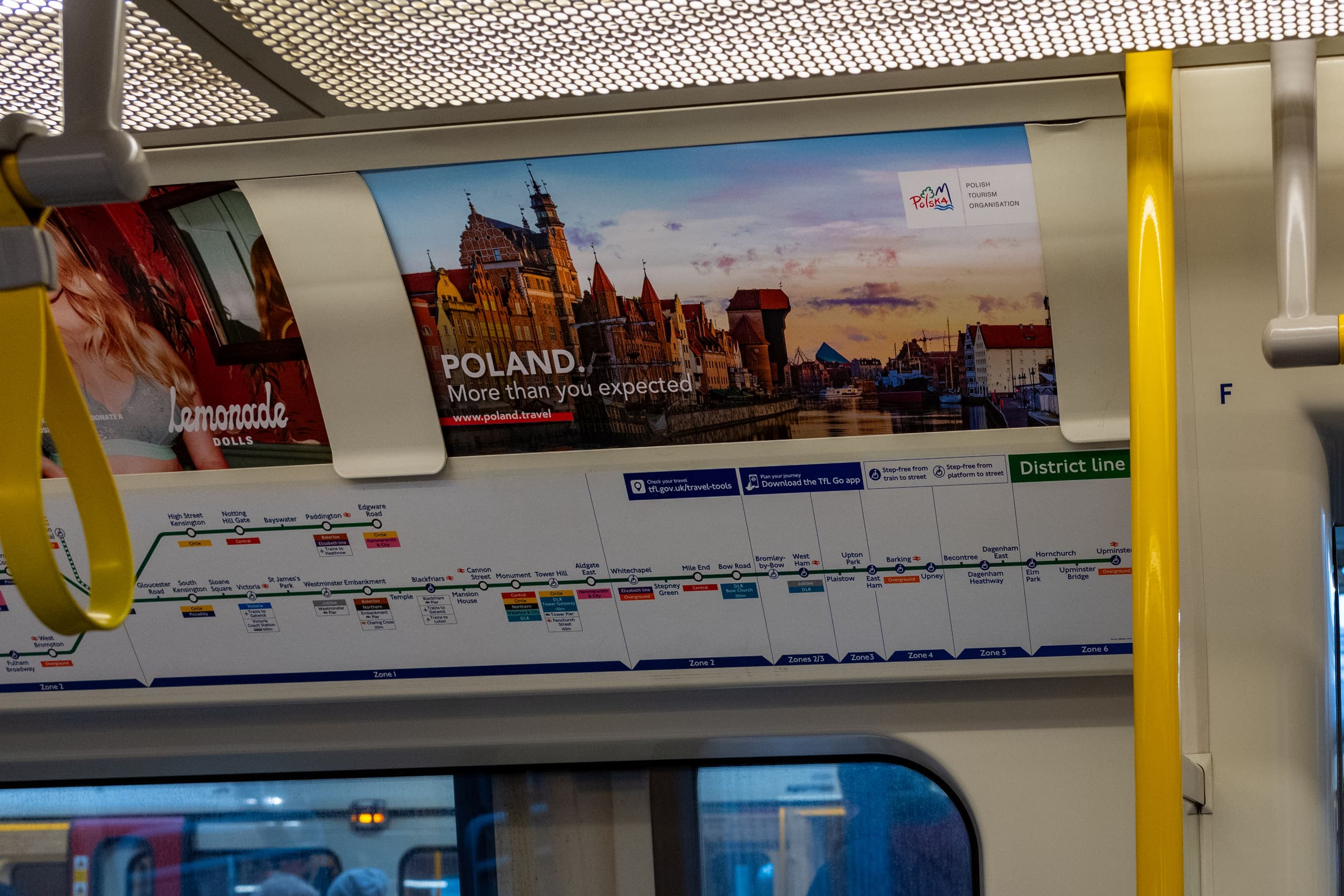
| Tube car panels | Typestatic | Creative size609 x 280 mm (w × h) | DwellThe length of the journey, at reading distance | Indicative cost£18 per panel, per 2 weeks |
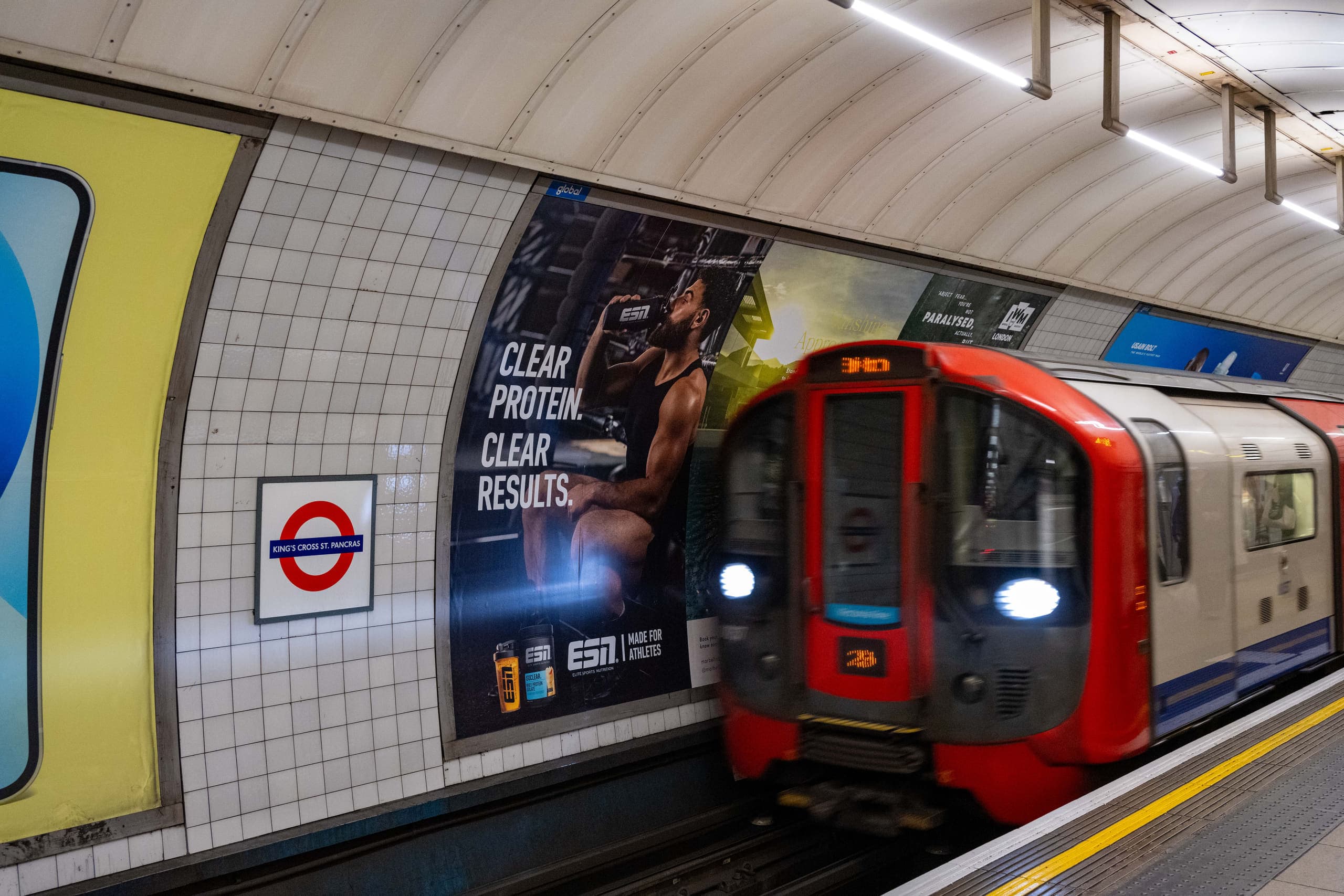
| 16-sheet cross-track | Typestatic | Creative size2032 x 3048 mm (w × h) | Dwell3 minutes average platform dwell | Indicative cost£2,250 per panel, per 2 weeks |
| 48-sheet posters | Typestatic | Creative size6060 x 3048 mm (w × h) | Dwell3 minutes average platform dwell | Indicative cost£6,000 per panel, per 2 weeks |
| 12-sheet posters | Typestatic | Creative size3048 x 1524 mm (w × h) | Dwell3 minutes average platform dwell | Indicative cost£2,000 per panel, per 2 weeks |
| 96-sheet posters | Typestatic | Creative size12192 x 3048 mm (w × h) | Dwell3 minutes average platform dwell | Indicative cost£1,800 to £3,200 per panel, per 2 weeks |
| 6-sheet posters (paper) | Typestatic | Creative size1200 x 1800 mm (w × h) | DwellAt eye level, while passing through | Indicative cost£1,750 per panel, per 2 weeks |
| 4-sheet posters | Typestatic | Creative size1016 x 1524 mm (w × h) | DwellAt eye level, in high-footfall positions | Indicative cost£750 per panel, per 2 weeks |
| Escalator panels (static) | Typestatic | Creative size419 x 572 mm (w × h) | DwellThe length of the escalator ride | Indicative cost£300 per panel, per 2 weeks |
| Station domination | Typepackage | Creative sizeBespoke pack | DwellThe whole journey through the station | Indicative cost£40,000 to £250,000 per station, per 2 weeks |
Copy clearance
Artwork is cleared before it goes live. Clearance checks the claim, the audience and the environment — an execution that is fine in a magazine is not automatically fine at eye level in a station used by children. Clearance sits inside the wider campaign timeline, and it is the step that most often costs a start date.
- Alcohol, gambling and financial promotions attract the closest scrutiny.
- Health, nutrition and medical claims need substantiation held and ready.
- Anything that could be read as targeting under-18s is assessed on placement as well as content.
- Comparative claims against a named competitor need evidence attached.
Digital and paper are supplied differently
Paper formats are specified in millimetres and go to print, so the file is built to a physical size and the deadline is a production deadline. Digital formats are specified in pixels and are played out, so the file is built to a screen and the deadline is a delivery deadline. The two are not adaptations of each other, and a campaign running in both needs both built properly rather than one resized into the other.
- Check the orientation, not just the dimensions. Some Underground screens are portrait but take a landscape file that is rotated on delivery — supplying it already rotated is a common and avoidable error.
- Resolution is not uniform across digital formats, and on the large-format gateways it varies by station. Confirm per site rather than per format.
- Static formats carry a trim and a visible area. Anything critical near the edge is at risk on the physical panel, whatever the artwork looks like on screen.
- Supply the source file, not a flattened export, where the specification asks for one.
One artwork across two environments
Running the same execution in more than one format is normal and usually sensible, but the two placements are not read the same way. The Encore campaign ran a single portrait artwork as a backlit 6-sheet and as a cross-track poster: the 6-sheet is passed close up at walking pace in a circulation area, while the cross-track site is read from across the track for the length of a platform wait. An artwork that works in both is one where the core idea survives at distance and the detail rewards proximity, rather than one that depends on either.
Designing for the environment
- Read the dwell time. Twenty seconds in a ticket hall is not ninety on an escalator, and the same execution rarely suits both.
- Contrast survives distance; fine detail does not. Cross-track sites are read across a track.
- One idea per site. A sequential escalator run is the exception — that is one idea across several frames.
- Legibility beats cleverness at 3am on a platform with a delayed train.
Sources and references
- Media owner rate cards — Every price on this site is indicative planning guidance, confirmed with the media owner at booking.