Advertising at Canary Wharf Underground station
A weekday working audience with very little leakage to other routes, concentrated on the estate itself.
- Zone
- Zone 2
- Area
- Docklands
- Borough
- Tower Hamlets
- Entries and exits
- 38.9m entries and exits (2023)
- Lines
- 3
Estimated from TfL station entry and exit counts
Why advertise at Canary Wharf?
A weekday working audience with very little leakage to other routes, concentrated on the estate itself.
A weekday working audience with very little leakage: most people arriving here work in the estate and take the same route twice a day, five days a week. Weekend footfall is comparatively light, so campaigns are usually weighted to the working week rather than run flat.
Canary Wharf sits in zone 2, in Docklands, and is served by DLR, Elizabeth line and Jubilee. Platform formats can be weighted towards a single line; escalator, ticket hall and concourse formats reach everyone passing through.
What is nearby
Destinations within walking distance of Canary Wharf. Advertising here reaches people on their way to and from them.
- Canary Wharf estate
- One Canada Square
- Jubilee Place
- Crossrail Place Roof Garden
- Billingsgate Market
- Wood Wharf
Advertising locations
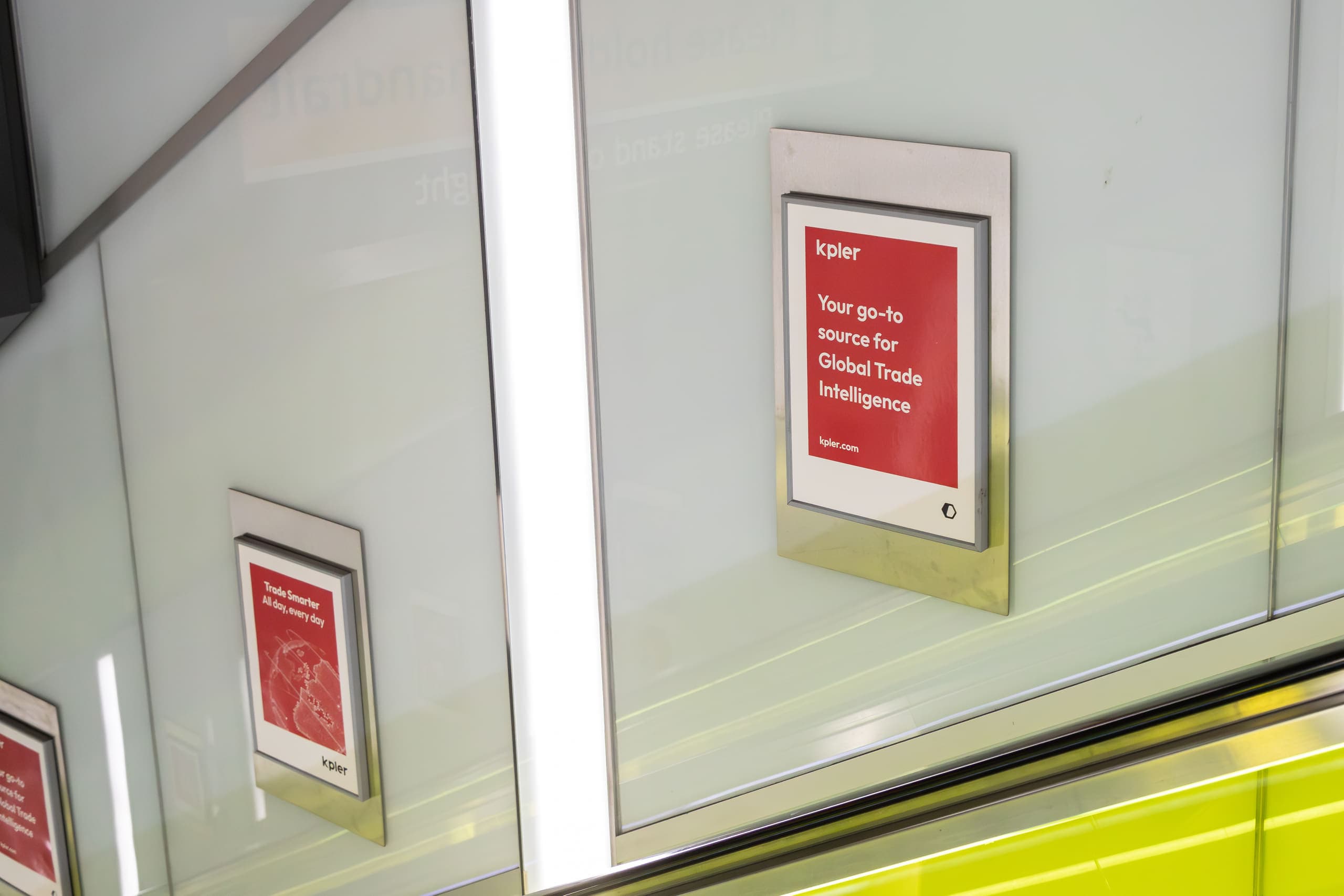
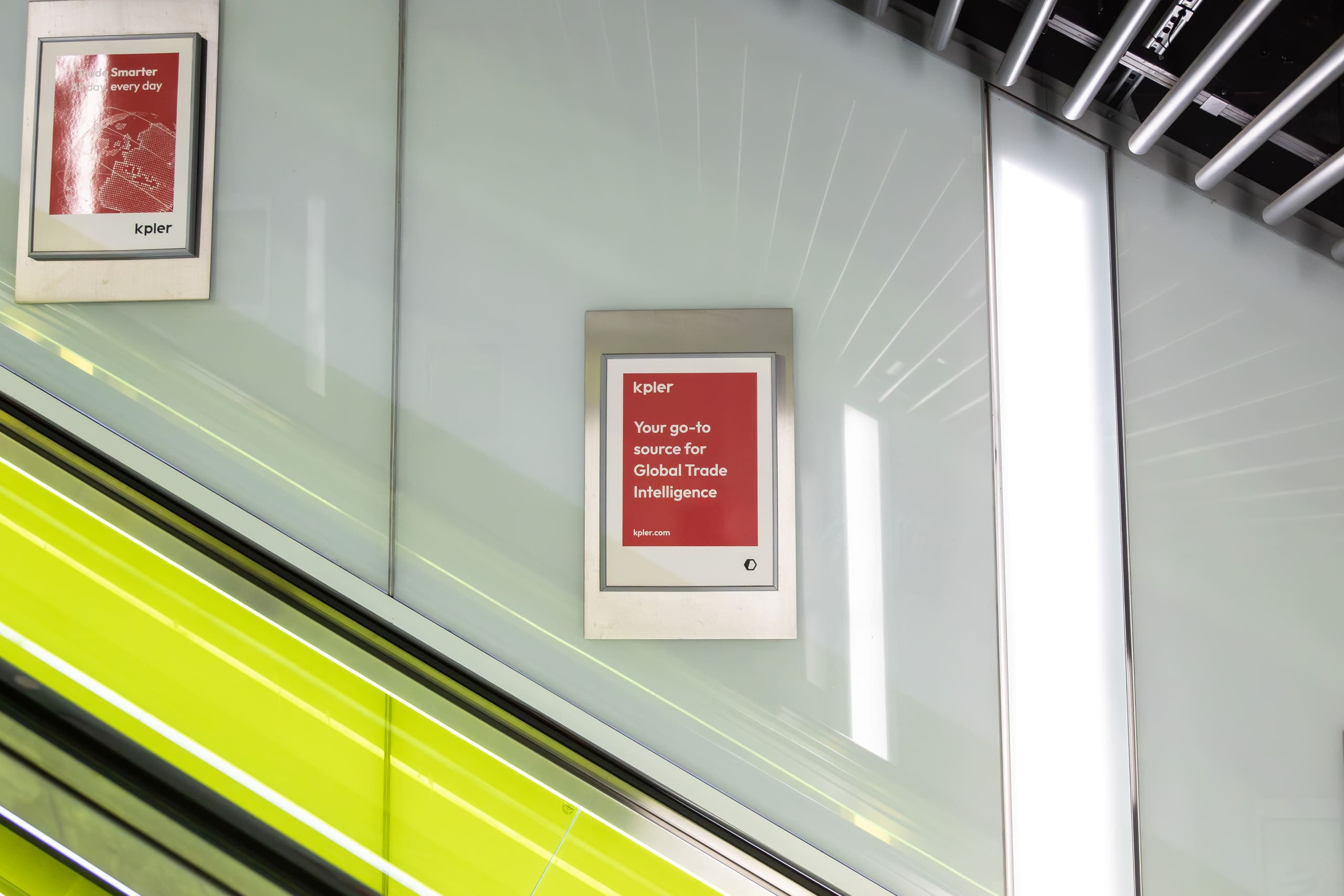
Formats at Canary Wharf
Our inventory records show these formats at Canary Wharf. They are what the station carries, not a live availability list — individual sites and dates are confirmed with the media owner when we plan the campaign.
- digital
Digital gateways
Large portrait screens positioned at ticket hall entry, seen head on as passengers arrive.
From £12,000 per 2 weeks
- digital
Digital 6-sheet (D6)
Portrait screens at eye level in ticket halls, entrances and concourses, carrying five seconds of full motion.
From £1,500 per screen, per 2 weeks
- digital
Digital 12-sheet (D12)
The larger landscape screen in ticket halls and concourses, where a D6 is not enough presence.
From £3,000 per screen, per 2 weeks
- static
16-sheet cross-track
Facing the platform from the opposite wall, read across the track for the whole wait.
From £2,250 per panel, per 2 weeks
- static
48-sheet posters
Cross-track large format, facing the platform from the opposite wall and read for the whole wait.
From £6,000 per panel, per 2 weeks
- static
6-sheet posters (paper)
The larger static poster unit, at eye level in ticket halls and passageways where footfall is heaviest.
From £1,750 per panel, per 2 weeks
- static
4-sheet posters
The smaller station poster, placed in the high-footfall parts of the station to build frequency cheaply.
From £750 per panel, per 2 weeks
Both digital and paper formats are recorded here, and the two behave differently on the same concourse.
Canary Wharf advertising costs
Indicative two week rates. Outside zone 1 the same formats generally sit towards the lower end of each range.
| Format | Indicative cost | Buying unit |
|---|---|---|
| 6-sheet posters (paper) | Indicative cost£1,750 | Buying unitper panel, per 2 weeks |
| 16-sheet cross-track | Indicative cost£2,250 | Buying unitper panel, per 2 weeks |
| Digital 6-sheet (D6) | Indicative cost£1,500 | Buying unitper screen, per 2 weeks |
| Digital escalator panels | Indicative cost£25,000 | Buying unitper station run, per 2 weeks |
| Station domination | Indicative cost£40,000 to £250,000 | Buying unitper station, per 2 weeks |
Planning guidance, not a quote and not live availability. Excludes VAT; poster rates include print and production where stated. Rates are confirmed with the media owner at booking.
With several lines meeting here, picking stations on audience rather than footfall changes what this costs to cover properly.
Nearby stations
Stations close enough to run as a cluster, which usually buys more coverage than concentrating everything on one site.
- Zone 1 · South Bank
Waterloo
4 lines
Britain's busiest rail terminus, delivering very high repeat exposure among south west London commuters.
65.9m entries and exits (2023)
- Zone 1 · City of London
Liverpool Street
5 lines
City finance and technology commuters, with weekday frequency among the highest on the network.
61.9m entries and exits (2023)
- Zone 1 · London Bridge
London Bridge
2 lines
Office towers, Borough Market and Shard visitors converging on one interchange.
50.2m entries and exits (2023)
Canary Wharf questions.
Station notes last reviewed 16 August 2026.
A two week digital escalator panel campaign is typically £8,000 to £25,000 depending on the pack, and poster formats start under £1,000 per panel. Outside zone 1 the same formats generally sit at the lower end of each range. All figures are indicative planning guidance excluding production and VAT, confirmed with the media owner at booking.
Canary Wharf is served by DLR, Elizabeth line and Jubilee. Platform and cross-track formats are bought by platform, so they can be weighted towards a single line. Ticket hall, escalator and concourse formats reach everyone passing through, whichever line they are travelling on.
A weekday working audience with very little leakage: most people arriving here work in the estate and take the same route twice a day, five days a week. Weekend footfall is comparatively light, so campaigns are usually weighted to the working week rather than run flat. Nearby destinations include Canary Wharf estate, One Canada Square and Jubilee Place.
Station dominations are subject to inventory and usually need twelve weeks' notice, from around £40,000 for two weeks. Only one advertiser holds a station at a time, so the peak trading periods go early.
Get Canary Wharf advertising costs.
Send the brief and we come back with the available sites, costs and on-air dates within two working days.
Get campaign costs